
The Story
Why it exists.
The beginning
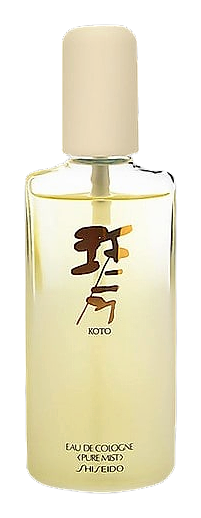
Koto arrived in 1967, its name drawn from a traditional Japanese musical instrument. Shiseido, by then well established after years of operation, had been developing expertise in perfumery, absorbing influences from abroad and applying them through a distinctly Japanese lens. Koto was the house leaning into that exchange without fanfare: aldehydes and a French-style chypre spine built around narcissus, iris, and a layered heart of carefully chosen florals. The composition reads neither as a translation of East for West, nor West for East. It occupies something rarer, a meeting point where both traditions happen to land without one dominating the other.
What's striking is the narcissus decision. Rather than routing the chypre's green character through more conventional materials, Koto builds it through narcissus and orris root, giving the composition a powdery, almost metallic bitterness that reads more intellectual than garden-party. The aldehydes amplify it, catching the floral notes and throwing them into sharper relief, almost like light refracting through cut crystal. As the hours pass, the composition shifts in subtle, rewarding ways.
The evolution
The first thirty minutes are all crackle. Aldehydes flash cold and soapy, green notes fold underneath like wet leaves crushed between fingers, and the citruses and spices argue politely for attention. Then the narcissus arrives, and the argument stops. It brings orris with it, powdery and cool, and the florals settle into something that smells like expensive face powder applied in a cold room. After two hours the leather starts to breathe through. By hour four the chypre base is fully in charge: oakmoss and patchouli doing their mossy, earthy work, castoreum adding warmth just below the surface. The drydown stays close to skin, intimate, lasting six or seven hours without ever announcing itself to a room. What lingers the next morning is the leather, soft and worn-in, like a jacket left over a chair.
Cultural impact
Koto has lived quietly since 1967, mostly known to collectors and chypre devotees rather than mainstream fragrance audiences. Its profile suggests a careful balance of restraint and complexity, qualities that have earned it a devoted following among those who appreciate classic chypre construction. The fragrance wears close to the skin in its later stages, projecting gently without overwhelming, which suits environments where understatement reads as confidence.