The Story
Why it exists.
The beginning
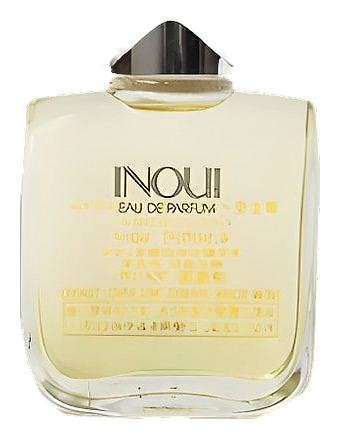
Inoui arrived in 1976 from Shiseido. The name itself, French for 'unheard of' or 'extraordinary,' was a quiet declaration of intent. From the first spritz, galbanum cuts through with a green intensity that feels almost metallic, the resinous sap amplified rather than softened by the aldehydes that sparkle at the edges. A cool, dewy rose emerges within minutes, brushed with a faint green leaf quality that suggests crushed stems and the underside of foliage. The composition keeps its structure taut: the florals are restrained, the oakmoss grounds the base with its earthy, almost bitter depth, and the whole thing wears close to the skin for a long, linear first phase. As the hours pass, the galbanum surrenders its sharpest edges and the chypre base comes forward.
What separates Inoui from its green-floral contemporaries is the restraint around its sharper materials. The galbanum and juniper aren't softened into prettiness. They're allowed to stay bitter, almost medicinal, while peach and Amalfi lemon add just enough sweetness to keep the composition from collapsing into austerity. The pine-and-thyme heart gives it a resinous, forest-floor quality unusual for a feminine-marketed chypre, and the inclusion of civet in the base was a deliberate choice toward warmth rather than shock, anchoring the oakmoss and myrrh with something undeniably alive.
The evolution
The opening is an assault of green, and there's no gentle way in. Galbanum and juniper arrive first, bitter and sharp, smelling of torn stems and resinous sap. Amalfi lemon cuts through with brightness while peach softens the edges just enough to keep it wearable. For the first thirty minutes, this is the dominant energy: cool, bitter, almost challenging. Then the pine and thyme take over, and the composition shifts into something woody and herbal, with freesia and jasmine adding a translucent floral layer that never overwhelms. The heart phase is where Inoui settles into its stride, feeling like a walk through a damp forest clearing. As hours pass, the oakmoss and cedarwood emerge fully, and the civet does its quiet work: a warmth, a muskiness, something that reads as skin rather than perfume. Myrrh adds a resinous sweetness that rounds out the bitter edges. The drydown lasts well into the next day on fabric, smelling faintly of moss and amber and whatever your skin brings to it.
Cultural impact
Inoui earns its quiet place among the great green chypres. Wearers who discover it often describe it as the fragrance that made them understand chypres, or the one that ruined other green fragrances by comparison. It's a quiet classic, still in production decades later. From the first spray, galbanum takes command with a green, almost bitter intensity that recalls crushed leaves and resinous sap, sharpened by aldehydes that add a metallic shimmer. The heart that follows is cool and reserved: a restrained rose brushed with green leaf, a whisper of jasmine that keeps things airy rather than heady.