
The Story
Why it exists.
The beginning
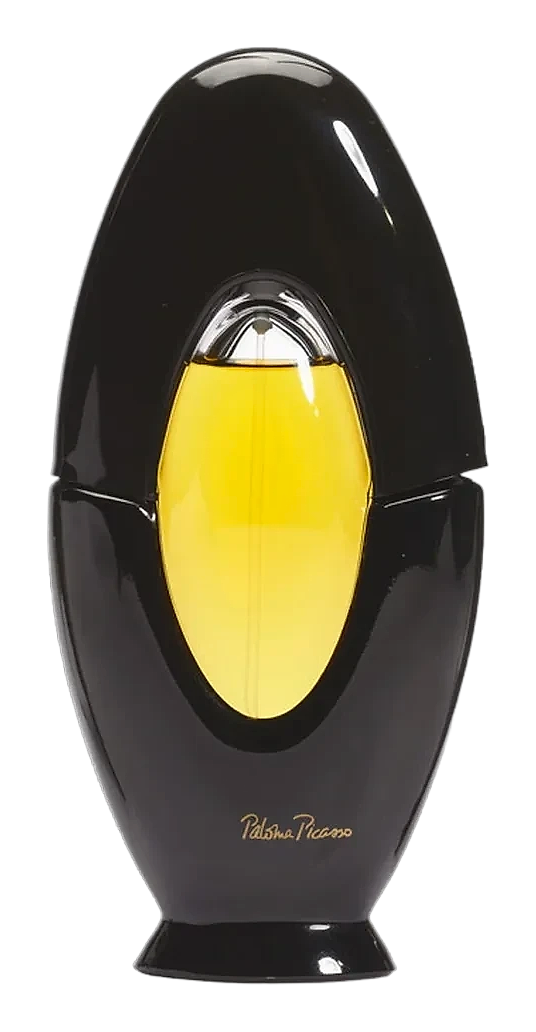
The story of Paloma Picasso begins with a childhood surrounded by scent, her maternal grandfather was a perfumer, and she grew up understanding how smells build worlds. When she turned to fragrance in the mid-1980s, she brought the same sculptural intelligence she applied to jewellery design at Yves Saint Laurent and Tiffany & Co. Her favourite perfume was Chanel Nº5, drawn to its aldehydic signature. Paloma Picasso wanted to create something that carried that same elegance but felt more Mediterranean, more deliberate. She worked with Francis Bocris at L'Oréal, and together they built a composition that would announce itself without apology. The brief was clear: this was not for passive popularity. It was for a woman with presence who would choose it deliberately. The original fragrance launched in 1984 at Saks Fifth Avenue in New York.
What makes the structure distinctive is how the aldehydic opening works against the chypre foundation rather than smoothing it over. Carnation and coriander give the first minutes a sharp, almost spicy edge, not gentle, not decorative. The bergamot and neroli brighten it without softening it. Beneath that, the floral heart of jasmine, hyacinth, mimosa, and ylang-ylang brings warmth that feels earned, not imposed. But the real architecture is the base: oakmoss, vetiver, and the animalic triad of civet, castoreum, and musk. That combination is what separates a chypre from a floral.
The evolution
The opening hits sharp. Aldehydes lift the carnation and coriander into something almost metallic, bergamot cutting through like light on a faceted surface. This is the 1984 signature, a bold entrance that doesn't wait for permission. Within thirty minutes, the aldehydic edge settles and the floral heart takes over. Jasmine and ylang-ylang warm against patchouli, honey beginning to show. The composition feels like it's making a promise. By the second hour, the chypre structure asserts itself. Oakmoss arrives with its green, slightly bitter character, vetiver adding earth. The animalic notes, civet, castoreum, don't announce themselves. They deepen the wear, give it dimension that reads as skin-warm rather than synthetic. This is where the fragrance becomes yours alone. The drydown holds for eight to ten hours on most skin types. On fabric, it lingers into the next morning, a faint trace of sandalwood and amber, the ghost of something that made an impression.
Cultural impact
Paloma Picasso occupies a specific cultural register, the woman who chooses deliberately rather than passively. Designed for an audacious and elegant wearer, the fragrance has maintained a dedicated following since 1984, long outlasting many contemporaries from the same era. Its aldehydic opening and animalic drydown create a signature that polarises and hooks in equal measure. The strong sillage and projection make it a fragrance for someone who wants to be noticed rather than blend in, and the longevity confirms it wasn't designed to fade.