
    Brand Profile

    Paloma Picasso fragrances originate from the atelier of a multi-disciplinary artist whose name carries unmistakable weight in the fashion wo…More

    France·Est. 1984·Site

    2

    Fragrances

    4.0

    Rating

    6
    Minotaure by Paloma Picasso – Eau de Toilette
    4.0

    Minotaure

    Eau de Toilette

    Paloma Picasso by Paloma Picasso – Eau de Parfum
    4.0

    Paloma Picasso

    Eau de Parfum

    Mon Parfum by Paloma Picasso
    Best Seller
    4.3

    Mon Parfum

    Tentations by Paloma Picasso
    Best Seller
    4.3

    Tentations

    Constellation by Paloma Picasso
    Best Seller
    4.3

    Constellation

    Paloma Picasso Eau de Toilette by Paloma Picasso
    4.2

    Paloma Picasso Eau de Toilette

    The Heritage

    The Story of Paloma Picasso

    Paloma Picasso fragrances originate from the atelier of a multi-disciplinary artist whose name carries unmistakable weight in the fashion world. As daughter of Pablo Picasso and a celebrated jewellery designer, she brought her sculptural sensibility to perfumery when she partnered with L'Oréal to launch her debut fragrance in 1984. The scent, an opulent chypre-floral composition created alongside perfumer Francis Bocris, reflected her signature aesthetic sharp angles softened by passionate colour. First arriving at Saks Fifth Avenue in New York, her fragrance catalogue has since expanded to include Mon Parfum (1985), Minotaure (1992), Tentations (1996), and various flankers. Her work bridges fine jewellery and olfactory architecture, both disciplines requiring an understanding of how form catches light and how scent occupies space.

    Heritage

    Paloma Picasso has inhabited the public imagination since birth, the eldest daughter of Pablo Picasso and Françoise Gilot, the painter's second wife and a significant artist in her own right. Raised between France and Italy, she absorbed artistic influences from multiple directions, eventually gravitating toward jewellery design as her primary medium before turning to fragrance. She became a recognised presence on the International Best Dressed List, cementing her status as a figure of sophisticated personal style. In 1984, she began experimenting with fragrance for L'Oréal, a partnership that gave her access to the cosmetics giant's formulation expertise while allowing her to impose her own creative vision. Her New York Post interview that year explained her intent: she designed the scent for strong women, a declaration that positioned her fragrance as something deliberately assertive rather than broadly appealing. The launch ceremony at Saks Fifth Avenue, photographed by Richard Avedon, marked her arrival in the fragrance industry with considerable fanfare. Subsequent releases, including Mon Parfum in 1985 and Minotaure in 1992, expanded her presence while maintaining the dramatic, sculptural character of her debut. Her jewellery background and her fragrance work share an underlying concern with wearable art, objects that transformed the body through material and craft.

    Craftsmanship

    The original Paloma Picasso fragrance of 1984 was crafted by perfumer Francis Bocris, working within L'Oréal's fragrance division. The resulting composition built on a chypre-floral foundation using labdanum, oakmoss, and patchouli as structural elements, layered with floral heart notes that give the fragrance its characteristic warmth. As a partner with L'Oréal, Picasso had access to the company's sourcing networks and formulation capabilities while maintaining creative control over the final product. The chypre family, to which her debut fragrance belongs, represents one of perfumery's most demanding structures, requiring careful balance between citrus top notes, floral heart, and deep balsamic base. L'Oréal's position in the French cosmetics industry provided the technical infrastructure for developing and manufacturing fragrance at scale while preserving the distinctiveness Picasso demanded. Subsequent formulations in her line have maintained this structural ambition, creating perfumes with considerable tenacity and sillage. The brand's approach to craftsmanship prioritises bold statement over delicate nuance, a choice that has contributed to the longevity of her most successful formulations.

    Design Language

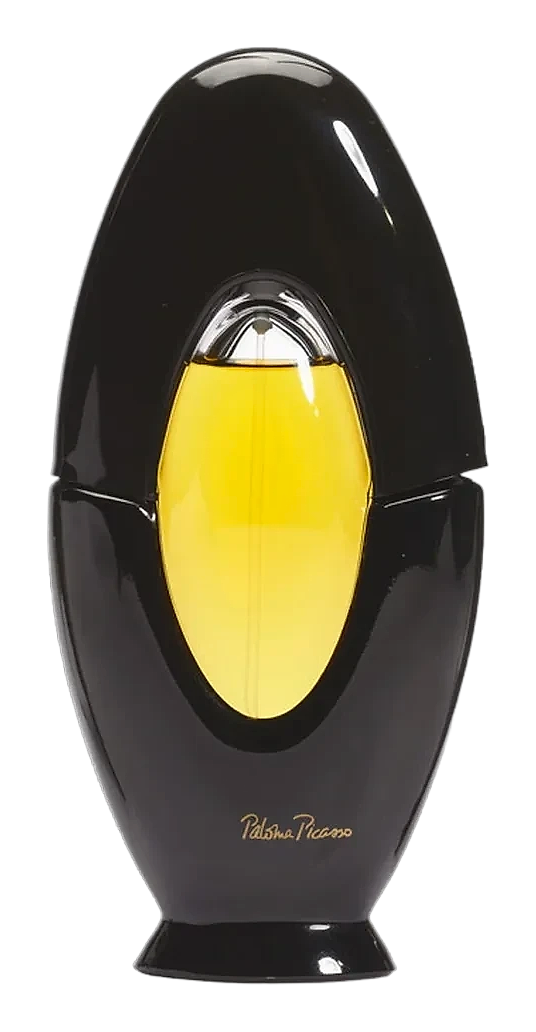
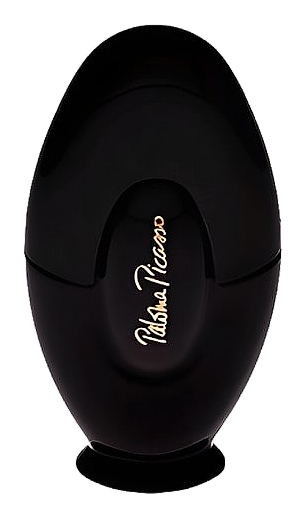
    The visual identity of Paloma Picasso fragrances draws directly from her jewellery design vocabulary. The signature bottle for her debut fragrance featured a faceted, angular shape reminiscent of cut gemstones, its geometry catching light in ways that transform the object into something decorative rather than merely functional. Black, gold, and deep jewel tones dominate the packaging, colours she has employed consistently throughout her jewellery collections. Her advertising campaigns, including early work with Richard Avedon, reinforced this aesthetic through high-contrast photography and architectural setting. The monogram that appears on packaging echoes the bold graphic sensibility of her jewellery branding. This cohesive visual approach ensures her fragrances read as extensions of her broader design practice rather than licensing exercises. The contrast between Picasso's delicate initials and the dramatic weight of her bottles and boxes creates a tension characteristic of her overall aesthetic, where refinement meets boldness.

    Philosophy

    The Paloma Picasso fragrance line operates from a clear premise: scent should make a statement. Unlike designers who approach perfumery as a logical extension of ready-to-wear, she treated fragrance as an independent creative territory, one where the rules of jewellery design could be reapplied. Her early statements to the press suggested a deliberate choice to create something that women with presence would choose deliberately, rather than a fragrance designed for passive popularity. This philosophy manifests in the bold, long-lasting character of her compositions, which tend toward rich chypre structures and animalic depth. She reportedly worked closely with L'Oréal's laboratories while insisting on ingredients and combinations that matched her vision rather than market expectations. The jewellery analogy extends to her approach to fragrance as personal adornment, something worn deliberately like a statement ring or dramatic earrings. Her various releases span different olfactory territories but share a commitment to memorable presence, scents that announce themselves rather than whispering.

    Key Milestones

    1949

    Paloma Picasso born in France, daughter of Pablo Picasso and Françoise Gilot

    1984

    Paloma Picasso fragrance launched at Saks Fifth Avenue, New York, created with perfumer Francis Bocris for L'Oréal

    1985

    Mon Parfum released, expanding her fragrance presence in the luxury market

    1992

    Minotaure launched, her second major fragrance line extension

    1996

    Tentations introduced, another fragrance within her established aesthetic

    2017

    Paloma Picasso fragrance reformulated and re-released with updated packaging

    At a Glance

    Brand profile snapshot

    Origin

    France

    Founded

    1984

    Heritage

    42

    Years active

    Collection

    2

    Fragrances released

    Avg Rating

    4.0

    Community sentiment

    Release Rhythm

    1996
    1
    1992
    1
    1985
    1
    1984
    2
    palomapicasso.com

    Did You Know?

    Interesting Facts

    Distinctive details and defining moments that shape the house personality.

    01

    Paloma Picasso's mother, Françoise Gilot, was herself a celebrated painter who had a documented relationship with Picasso for over a decade, later writing critically about him in her memoir Life with Picasso.

    02

    Her first fragrance was launched at Saks Fifth Avenue in 1984 with advertising photography by Richard Avedon, one of the most recognised names in twentieth-century fashion imagery.

    03

    Paloma Picasso reportedly declined to use the family surname Picasso as her professional moniker for years, establishing herself in jewellery design under simply Paloma before eventually embracing the full name.

    04

    She served as creative director for Mikimoto, the Japanese pearl jeweller, designing an entire collection of pearl jewellery that expanded the brand's aesthetic vocabulary.

    05

    According to her New York Post interview at the time of her fragrance launch, she described designing the scent for strong women, a stance that distinguished her from contemporaries softening their products for mass appeal.