The Story
Why it exists.
The beginning
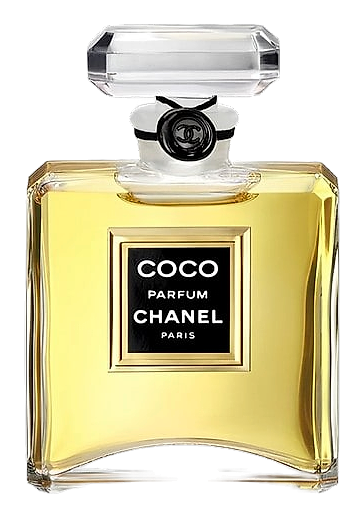
Jacques Polge created Coco in 1984 during a period when Chanel sought to expand its fragrance wardrobe beyond the timeless No. 5. Rather than pursuing safe territory, Polge constructed a fragrance that embodied the provocative spirit of Coco Chanel herself. The house wanted a scent that spoke to opulence and bold femininity without becoming a caricature of excess. Polge utilized high concentrations of natural Jasmine absolute and Bulgarian Rose alongside rare Ylang-Ylang to create a heart that felt sumptuous rather than sweet. The opening combination of Frangipani and Mandarin Orange was deliberately chosen to evoke Mediterranean warmth, referencing Coco Chanel's love of the Riviera and her fashion philosophy that embraced both restraint and luxury.
The note architecture reflects Polge's belief that luxury fragrances must contain tension to remain compelling. The bright citrus and warm spice opening exists in opposition to the heavy florals and animalic base, creatingdynamic interplay rather than linear development. Frangipani in the opening echoes the tropical origin of many Chanel fragrance materials while serving as foreshadowing for the Ylang-Ylang that follows in the heart. The Benzoin and Frankincense pairing grounds the composition in sacred resins that nod to Chanel's practice of incorporating precious materials into every aspect of creation.
The evolution
The opening proves immediately assertive, citrus and warm spice arriving simultaneously without apology. Mandarin Orange asserts itself first before Frangipani softens the experience into tropical creaminess. Coriander and Allspice arrive as the top lingers, adding aromatic complexity that invites closer inspection. Within thirty minutes, the heart takes command as Jasmine absolute and Ylang-Ylang emerge with their characteristic indolic depth. Orange Blossom introduces a bitter-sweet counterpoint while Iris powder lends sophistication. The composition shifts gradually into its base phase where Benzoin and Frankincense create a sacred, resinous warmth. Patchouli anchors the transition while Honey sweetens the descent into the final drydown where Civet and Musk project the fragrance's animalic sensuality into extended wear.
Cultural impact
Coco arrived in 1984 as a warm, Oriental, and unapologetically bold fragrance at a moment when the fragrance market was chasing lighter, fresher directions. It became a template for a certain kind of power fragrance: complex enough to be interesting, strong enough to be noticed, sophisticated enough to reward attention. Forty years later, it remains one of the defining Oriental women's fragrances from a major luxury house. The warm-spice-and-powder character it established became its own subcategory, fragrances that smell like confidence, translated into scent.