
The Story
Why it exists.
The beginning
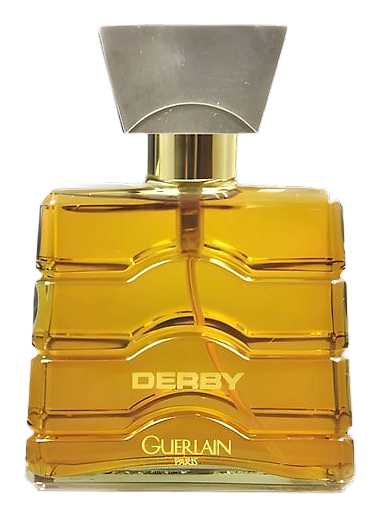
Derby arrived in 1985, when Jean-Paul Guerlain was at the height of his craft. The name carries equestrian weight, the kind of occasion where the right scent is assumed, not discussed. Guerlain had spent decades building a vocabulary of masculine refinement, and Derby was his statement on what that refinement could hold: complexity without noise, confidence without announcement. It wasn't built for every man. It was built for the man who already knew.
What makes Derby interesting as a composition is the way it holds contradictions. The citrus top is cool, almost medicinal from the artemisia, while the leather base carries animal warmth. The pepper and nutmeg in the heart add spice without tipping into sweetness. It's a chypre that behaves, structured, dry, assured, but underneath that structure, there's a restlessness that keeps it from feeling like a costume. This is what distinguished Guerlain's masculine work from the broader masculine releases of the era: the ability to balance formal restraint with olfactory depth.
The evolution
The opening hits cool and green, bergamot and artemisia arrive together, with peppermint lifting everything a half-step above the skin. There's an herbal bite that reads almost medicinal, the kind of sharpness that makes you lean in. Within twenty minutes, the citrus fades and the heart takes over: nutmeg flower and black pepper warm things up, while jasmine and rose add a quiet floral undertone that most masculine fragrances of 1985 wouldn't have dared. The transition isn't dramatic, it's a slow handoff. By the second hour, leather has arrived. It doesn't shout. It settles, with oakmoss underneath and vetiver extending everything outward. The drydown on this one is the whole point, it lasts 8 to 10 hours on most skin, and the vetiver and patchouli hold the line long after the citrus is a memory. On fabric, it lingers into the next day.
Cultural impact
Derby developed a following among men who wanted complexity without noise, the kind of fragrance that announces nothing and holds its ground. It's become a collector's item since its discontinuation, sought by those who remember it and those who discovered it too late. This quiet authority is what keeps enthusiasts searching for vintage bottles.
The House
GuerlainGuerlain stands as one of the oldest and most revered perfume houses in the world, founded in Paris in 1828 by Pierre-François-Pascal Guerlain. What began as a boutique on rue de Rivoli quickly became the preferred destination for Parisian society, attracting dandies and elegant women who sought custom-crafted fragrances. The house's influence grew to such heights that Guerlain earned the title of Official Perfumer to Napoleon III after presenting Eau de Cologne Impériale to Empress Eugénie as a wedding gift in 1853. This royal patronage marked the beginning of Guerlain's enduring association with European aristocracy, as the house went on to create fragrances for Queen Victoria and Queen Isabella II of Spain. Today, under the creative direction of Thierry Wasser, the fifth-generation perfumer, Guerlain continues to shape the landscape of fine fragrance with a portfolio spanning over 1,100 olfactory creations. The house remains headquartered at its legendary Champs-Élysées mansion, a historic monument that anchors Guerlain's position at the intersection of heritage and contemporary luxury.
The Creator
Jean-Paul GuerlainJean-Paul Guerlain's style resists easy categorization, though richness and depth define nearly every composition. He favored opulent oriental structures, warm woods and resins, and florals treated with almost sculptural precision.