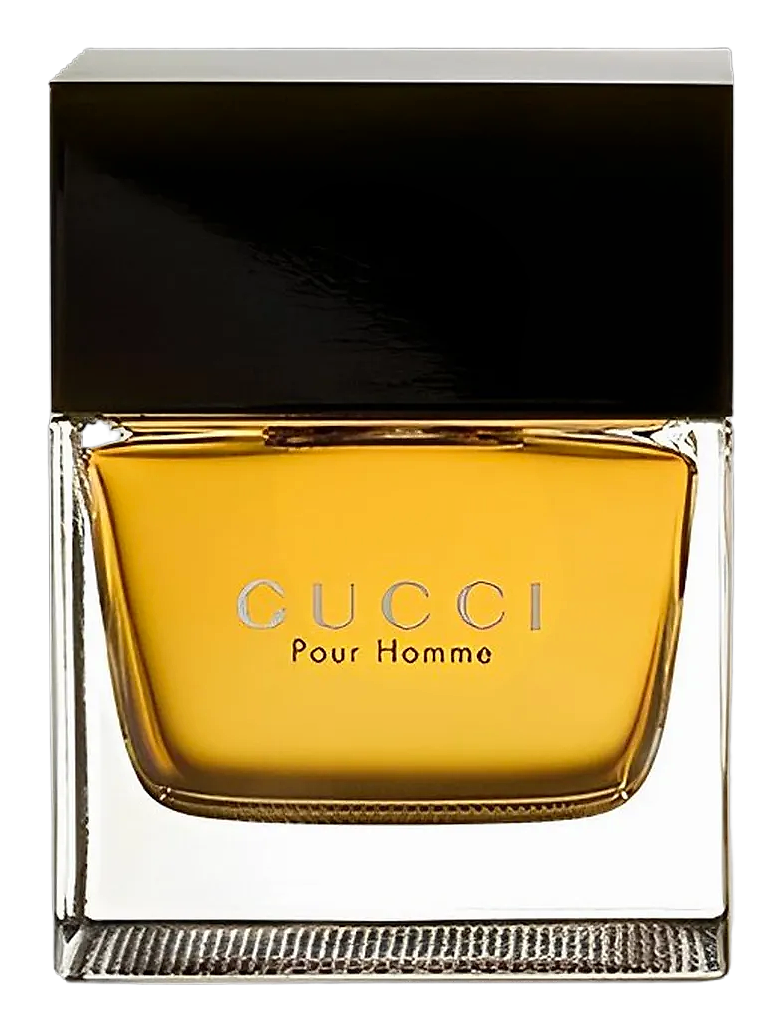

The Story
Why it exists.
The beginning
Michel Almairac created Gucci pour Homme in 2003 as the House's answer to a specific question about masculine scent: what does a self-assured man smell like? Not the one trying to impress. The one who doesn't need to. Gucci approached masculine refinement differently at the time, targeting a gentleman who moved through the world on his own terms. The opening note of papyrus was unusual for a mainstream masculine release, signaling immediately that this was not a safe composition. Bergamot and basil anchored the top with clarity and freshness while ginger and tarragon added an herbal complexity that kept early wearers uncertain of what would come next.
The note pyramid reflects a commitment to woody restraint rather than flashy sillage. Frankincense and cedarwood form the backbone, two materials that communicate sophistication without ornamentation. Bergamot and basil in the opening establish immediate freshness, while tonka bean and vanilla in the drydown provide just enough warmth to prevent the composition from becoming austere. This is a fragrance built for layering, where each phase reinforces the next: the dry quality of papyrus transitions naturally into woody cedar, and the earthy vetiver in the base echoes the sage that precedes it.
The evolution
The fragrance opens with papyrus and bergamot leading, supported by basil, ginger, tarragon, lavender, lemon, and petitgrain. The papyrus is the key to the first minutes: dry, almost mineral, it separates this from typical citrus openings. As basil and ginger lift the composition, tarragon and lavender add an herbal quality that reads as natural rather than synthetic. Within the heart phase, cedarwood and sandalwood emerge as the structural core, with geranium and jasmine softening the woodiness just enough. Patchouli and allspice introduce warmth while pink pepper adds a faint spark of spice. The drydown begins when frankincense enters, shifting the energy from bright to contemplative. Amber and musk provide the warmth that holds the base together while tonka bean and vanilla introduce a sweetness that never dominates. Vetiver and sage keep the finish grounded and aromatic, ensuring the final hours feel earthy and intimate rather than sweet or linear.
Cultural impact
Gucci pour Homme has quietly built one of perfumery's most devoted followings. Released in 2003, it offered something different: woody-spicy depth with leather and incense, worn close to the skin. Two decades later, it still commands attention from those who know it. Vintage bottles change hands among collectors who appreciate what the fragrance achieves, and the secondary market reflects genuine appreciation rather than novelty. It rewards patience and attention, revealing more with each wearing, each stage of development offering something that reinforces the overall composition.