
The Story
Why it exists.
The beginning
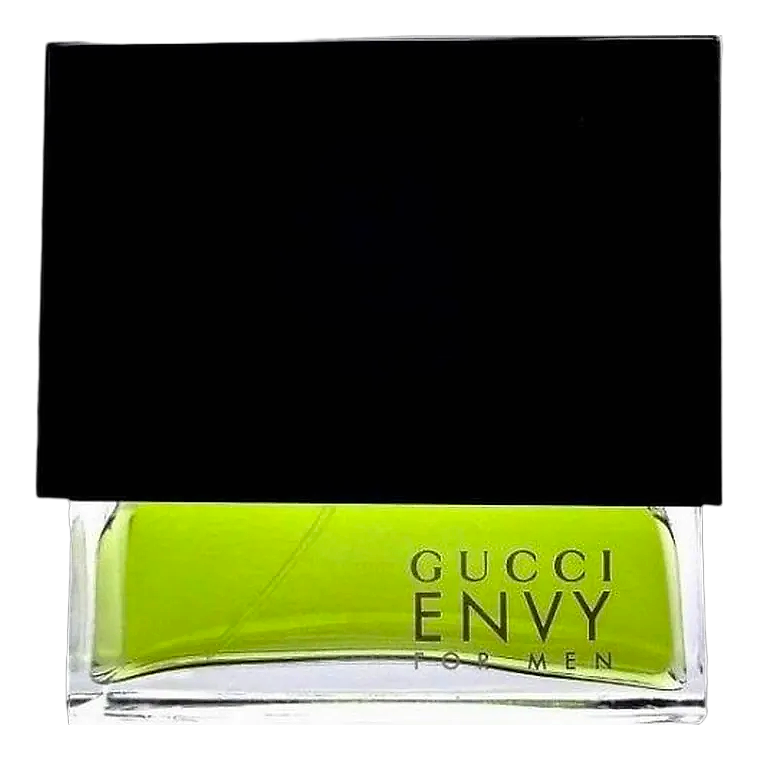
Gucci built its identity on bold aesthetics and unapologetic luxury, translating this into fragrance as statement rather than background. The name Envy says everything. Daniela Andrier crafted a scent that captures desire, something you smell on someone across the room and immediately want. The 1998 release reflected an era when masculinity in perfumery could be assertive without apology, and Envy for Men embodied that spirit through a composition rooted in spice, wood, and leather.
The note structure reflects a philosophy of contrast. Spice opens with confidence, florals soften without becoming feminine, and leather anchors with authority. The pairing of coriander with vanilla might seem unlikely, but the leather and patchouli base bridges these extremes, creating a composition that feels cohesive despite its complexity. Vetiver adds a dry, smoky quality that prevents the vanilla from sweetening the scent inappropriately.
The evolution
Envy for Men unfolds in three distinct movements. The opening introduces coriander and black pepper with immediate impact, their green and piquant characters amplified by mandarin orange and rosewood. This initial phase is energetic, almost confrontational. The heart develops as sandalwood gains prominence, smoothing the earlier sharpness and introducing florals through carnation and rose, while jasmine adds a faint sweetness. The drydown represents the scent's final statement: leather asserting dominance, patchouli providing earthiness, vetiver contributing dry wood, and vanilla threading through as a quiet counterbalance. Each phase builds on the previous without abandoning it.
Cultural impact
Gucci Envy for Men arrived during a period when masculine fragrance was evolving toward bolder, more complex compositions. The aromatic-spicy-woody structure captured that moment, confident without being loud, unapologetic in its identity. It's remained a reference point in masculine fragrance discussions, cited for its specific combination of ginger, tobacco, and leather. Still sought after on the secondary market, it maintains its position as a distinctive option in a crowded field.