The Story
Why it exists.
The beginning
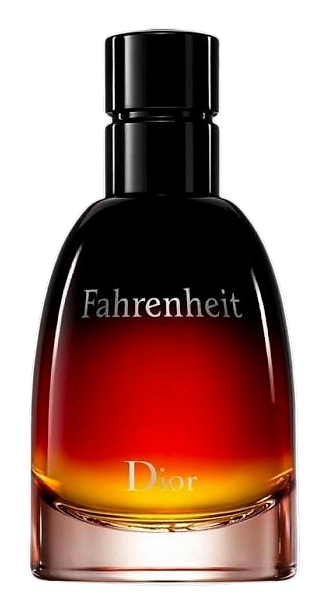
Fahrenheit arrived in 1988 as Dior's answer to a changing landscape in men's fragrance. The brief was simple on paper: create something that redefined what masculine could smell like. The perfumers Jean-Louis Sieuzac, Michel Almairac, and Maurice Roger worked from an unusual premise, what if warmth and coolness weren't opposites but collaborators? The name itself was a statement: Fahrenheit, the scale that bridges two temperature references, became the framework for a fragrance that refuses to sit still.
What makes Fahrenheit's structure noteworthy is the violet leaf. Most fragrances use violet as a quiet supporting note, a powdery softness buried in the heart. Here it leads. Paired with leather, not the heavy, smoky leather of tobacco fragrances, but something cleaner, almost mineral, the violet reads differently. It becomes the bridge between the fresh citrus opening and the warm, animalic base. The chamomile in the top adds an unexpected herbal quality that most wearers don't identify by name but certainly feel: a softness that prevents the bergamot and mandarin from reading as sharp or synthetic.
The evolution
The opening arrives quickly: mandarin and bergamot, bright and unapologetic. Within minutes, the citrus pulls back and the violet leaf takes over, not powdery, not sweet, but green and slightly waxy, like pressing a leaf between your fingers. The cedar arrives mid-development, dry and warm, threading through the heart alongside carnation and a hint of nutmeg. Then the base establishes itself: leather and musk, with vetiver grounding everything. The drydown is where Fahrenheit earns its reputation. Eight to ten hours on most skin, the leather-skin-muskiest layer settles into something close, intimate, present without projecting. On fabric, it lingers until the next wash.
Cultural impact
Fahrenheit has outlasted virtually every masculine fragrance launched alongside it. It sits in the small group of men's fragrances that defined a generation, not through ubiquity, but through staying power. Men who discovered it in their twenties still reach for it decades later. The leather-violet combination became a reference point for how masculine fragrances could balance warmth and coolness without choosing one. It doesn't try to please everyone. That restraint is exactly why it still matters.