The Story
Why it exists.
The beginning
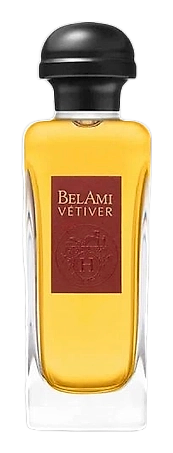
Bel Ami takes its name from Guy de Maupassant's 1885 novel, a story of ambition, charm, and Parisian social climbing. Jean-Louis Sieuzac understood what that title meant in 1986 France: a man who knew exactly what he wanted and had the presence to claim it. The fragrance was his interpretation of that energy, not a scent that asks, but one that arrives. Sieuzac built it as a chypre extract, leveraging the structure that perfumery had perfected over decades but pushing it toward something opulent and animalic. The house of Hermès, with its leather heritage and quiet authority, gave him the space to make a statement no other brand could. Bel Ami was the result of creative freedom and 40 years of perfumery craft.
What makes Bel Ami's structure interesting is the way it refuses to be one thing. The opening is almost delicate, citrus and herb, the kind of freshness that announces politely. Then the carnation arrives, spicy and unexpected, like a door swinging open to reveal a richer room. The leather doesn't wait. It builds underneath, patient but inevitable, until it becomes the whole story. The combination of vanilla and coconut in the base gives it warmth without sweetness, the leather remembers it's wearing skin. Oakmoss anchors everything, that classic chypre fixative that modern reformulations have struggled to replicate. This is a fragrance that understands contrast as a compositional tool, not an accident.
The evolution
The opening hits with bergamot and lemon, bright, sharp, a little astringent. Sage arrives within minutes, green and herbal, pulling focus away from the citrus toward something earthier. You're aware of the cardamom now, a warmth building underneath. Fifteen minutes in, the carnation explodes. Spicy. Clove-like. The carnation is the pivot point, everything before it was prologue. Patchouli and cedar follow, woodsy and deep, while jasmine and orris root add a quiet floral undertone that most people miss entirely. Two hours in, the leather announces itself. Not subtle. Not polite. It wraps around the skin with oakmoss and styrax, resinous and animalic. Vanilla and coconut sweeten the edges just enough to keep it from being harsh. The drydown is where Bel Ami lives. On fabric, it lasts until the next wash. On skin, eight to ten hours, becoming a warm, intimate presence that only someone standing close will notice.
Cultural impact
Bel Ami occupies a strange position in fragrance history. Launched in 1986, it arrived at the tail end of the big, bold chypre era but before the oakmoss restrictions that would reshape the category. Wearers who remember it from the 1980s describe it as the scent of a particular kind of man, educated, confident, someone who had opinions and wasn't afraid to share them. Younger wearers discover it and wonder why nothing modern smells like it. The answer is partly reformulation and partly chemistry: Bel Ami represents a moment when perfumers still had access to materials that now require creative workarounds. It's not a vintage curiosity, it's a reference point.