The Story
Why it exists.
The beginning
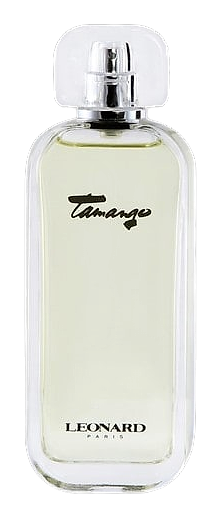
Tamango arrived in 1977 from the house of Leonard Paris, formulated by Jean-Louis Sieuzac. The brand, founded by Daniel Tribouillard in 1958, had spent nearly two decades building a reputation for refined, wearable French compositions. Fashion came first in 1970, then Eau Fraiche in 1974, and by the time Tamango landed, the house was ready to try something with more muscle. The name carries the same energy as the fragrance itself, slightly exotic, a little defiant, a French take on something that doesn't quite behave like a French perfume. Sieuzac built Tamango around a green-floral heart anchored by a chypre skeleton, a structure that was already considered classic by 1977 but still had room to surprise. The aldehydes were tuned to lift. The spices were kept tight. Nothing was meant to shout, but nothing was meant to disappear either. It was a fragrance designed for a woman who had already decided who she was and wanted something that matched.
The interesting thing about Tamango is how it balances the aldehydic sparkle of late-sixties and early-seventies French perfumery against the earthy gravity of a chypre base. Aldehydes this prominent tend to make a composition feel airy, almost weightless. Oakmoss and amber pull it back down. The result is a fragrance that hovers, never quite landing in either camp. Carnation brings its clove-like warmth into the floral heart, adding a slightly raw, lived-in quality that the lily and iris would otherwise smooth out. Green notes at the top keep everything sharp before the florals can get too sweet.
The evolution
The first spray is all green and aldehyde, a fizzy brightness that lasts roughly twenty minutes before the spices and bergamot start to round the edges. Then the florals take over, and this is where Tamango spends most of its life on skin, rose and iris and carnation weaving together for a solid three to four hours. The carnation gives warmth. The lily keeps it cool. The iris adds that powdery, suede-like depth that makes the whole heart feel expensive rather than pretty. By hour five or six, the oakmoss and amber arrive underneath, and the composition shifts from floral to something drier, warmer, more rooted. The sandalwood and tonka bean settle in last, leaving a quiet trail that can still be caught on a scarf the next morning. Total arc runs about six to eight hours, with moderate sillage that stays personal rather than performative.
Cultural impact
Tamango sits in a specific corner of French perfumery that has mostly disappeared from department store shelves. Chypre florals this structured, this mossy, this dependent on oakmoss, became harder to formulate under IFRA restrictions, which is part of why bottles from the original era command attention from collectors. It wears like a fragrance from a time when florals were expected to have architecture, not just prettiness. People who find it tend to keep it.