The Story
Why it exists.
The beginning
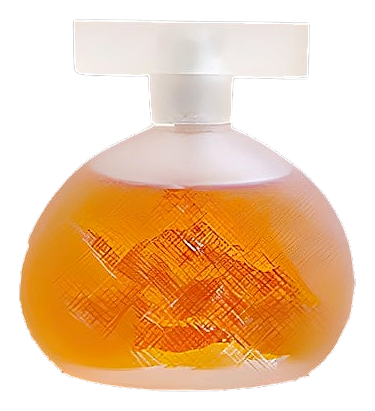
Leonard released Miss Balahe in 1996 as part of a quiet catalog of distinctive women's fragrances spanning the previous two decades. The late 90s market was saturated with white florals, tuberose, jasmine, orange blossom, but Leonard approached the brief differently, building outward from a powdery base rather than leading with the florals themselves. The result was a fragrance that refused to announce itself on first spray, asking instead for patience. The name carried its own weight: Miss Balahe suggested a specific woman, not a demographic. Confident. Understated. Someone who lets the scent do the talking.
What makes Miss Balahe structurally unusual is the transition from its opening to its base. The top notes, bergamot, orange blossom, cyclamen, freesia, lily of the valley, arrive crisp and green, almost aloof. But underneath, the real architecture waits: a heart of tuberose, jasmine, rose, and lilac that doesn't just support the opening, it overwrites it. The heliotrope in the base is what gives Miss Balahe its signature powdery finish, distinct from the vanillic bombs of the era. Combined with amber and musk, the drydown becomes something softer, warmer, almost nostalgic, the olfactory equivalent of a handwritten note tucked into a pocket.
The evolution
The opening hits bright and green, bergamot, lily of the valley, a flash of cyclamen. Freesia adds a fleeting sweetness before the florals take over. Within twenty minutes, tuberose arrives uninvited. Creamy, heady, the kind of white floral that announces itself without apology. The jasmine follows, amplifying everything. This middle phase is where Miss Balahe earns its reputation, rich without being heavy, present without overwhelming. After two to three hours, the powdery transition begins. Heliotrope and vanilla take over, amber warmth underneath, musk that stays close to skin. By hour four, you're wearing something entirely different from what you sprayed at hour one. The longevity holds, eight to ten hours on most skin types, occasionally longer on fabric. The final impression is soft, warm, intimate. Not the fragrance you met. The one you stayed with.
Cultural impact
Miss Balahe existed in a crowded 90s market without shouting for attention. Where competitors led with tuberose or went heavy on vanilla, Leonard chose the powdery heliotrope route, less immediate, more patient. The fragrance found its audience among women who preferred scent to announce itself quietly. Leonard's broader catalog spans crisp citruses like Eau Fraiche de Leonard (1974) to bolder orientals like Tamango (1977), and Miss Balahe occupies its own space within that range: not the lightest, not the darkest, but perhaps the most layered.