The Story
Why it exists.
The beginning
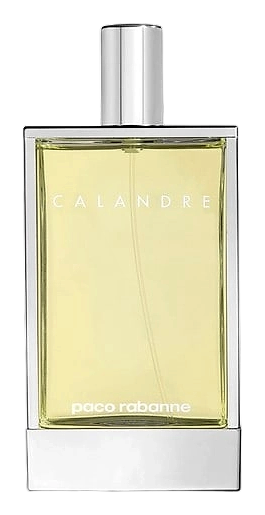
Calandre arrived in 1969 as Rabanne's first fragrance, the house's answer to a question nobody had asked yet: what does architectural futurism smell like? Perfumer Michel Hy translated Paco Rabanne's structural engineering background into an aldehydic composition that treated florals as building materials rather than decoration. The name itself carries dual meaning, calandra, the lark, and calandre, the automotive engine component. Nature and industry in a single word. Hy built the fragrance around aldehydes as structural girders, using them to lift and shape the florals rather than overwhelm them. Bergamot sparkled across the top while rose, hyacinth, jasmine, and geranium formed an intensive, almost industrial heart. It was experimental from launch, a chypre-floral hybrid that resisted easy categorization. That was the point. Rabanne had spent years constructing fashion from chain mail and industrial links.
Aldehydes have been in fragrance since Chanel No. 5 made them iconic in 1921, but they remain one of perfumery's more polarizing materials. On paper, they're the compound that gives certain waxes and fatty acids their scent, which is why critics reach for the word "soapy." On skin, handled correctly, they become something else entirely: effervescent, rising, luminous. Calandre leans into that luminous phase rather than the sharp, metallic one. The bergamot in the top notes isn't just citrus, it's a precision instrument here, keeping every aldehydic edge from cracking. The green notes, galbanum, cut stems, whatever the green accord references, add cut-glass clarity that most aldehydic florals skip entirely.
The evolution
The opening thirty minutes define Calandre entirely. Aldehydes arrive fizzing and bright, the green notes adding immediate crispness, not herbal, not aquatic, but something closer to the smell of glass freshly cut. Bergamot sparkles underneath without dominating. Then, gradually, the florals take over. Rose opens first, cool and precise, followed by hyacinth's slightly green floral intensity and jasmine's warmer undertone. The aldehydes don't disappear, they soften, becoming warmth rather than brightness. By the third hour, the base arrives: oakmoss and vetiver anchoring everything, sandalwood adding cream, amber providing warmth, musk staying close to the skin. Six to eight hours of quiet presence. The sillage drops to intimate by hour four, present for whoever stands beside you, invisible to the room. That's the structure Rabanne spoke of. Fresh first. Built to last.
Cultural impact
Calandre launched in 1969 as the house's first fragrance, an aldehydic floral built with the same industrial boldness that had made Rabanne's fashion controversial. It broke from the aldehydic-floral pack by leaning harder into green and citrus, creating something more architectural than its peers. The approach became a template for how bold fashion houses approach fragrance: fresh first, structured second, full of vibrations.