The Story
Why it exists.
The beginning
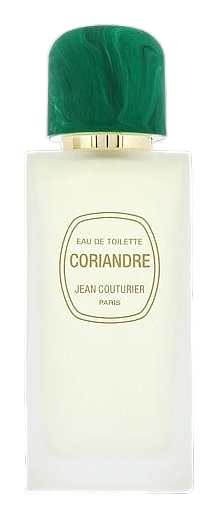
Jacqueline Couturier created Coriandre for a house her husband Jean founded after recognizing her compositional talent. The 1973 brief was deceptively simple: something new. What she delivered was a green chypre that leveraged aldehydic chemistry in a way that felt radical for its era. The opening combines angelica and coriander with aldehydic brightness to create immediate intrigue, while the floral heart demonstrates her understanding of balance over opulence. This was not perfume as decoration but perfume as conversation.
The note selection reflects Jacqueline Couturier's philosophy: each ingredient must earn its place. Coriander appears not for novelty but for the citrus-spice nuance it contributes to the opening. The six-note heart avoids redundancy through careful proportioning. The drydown returns to oakmoss and civet, acknowledging the chypre tradition while the aldehydic introduction signals modernity. Every pairing exists for a reason.
The evolution
The fragrance begins its life as a crisp aldehydic statement, angelica and coriander conspiring to create an herbal freshness that orange blossom sweetens. Within twenty minutes the heart takes command: geranium introduces green sophistication while iris adds powdery refinement. The floral bouquet of jasmine, rose, lily, and ylang-ylang could easily overwhelm, yet Jacqueline restrained the composition, allowing each note to speak without shouting. By hour two the drydown asserts itself as a textbook chypre, oakmoss and vetiver providing the earthiness that defines the genre while civet adds subtle animalic character. Patchouli and sandalwood round the edges, creating a base that whispers rather than shouts.
Cultural impact
Coriandre presents a green-chypre structure with aldehydic lift and powdery floral heart that represents a specific moment in French perfumery: formal, architectural, uninterested in sweetness as a virtue. The aldehydic quality provides a sparkling, almost metallic brightness that opens the composition, immediately setting it apart from more straightforward green fragrances. This top note interacts with the green elements beneath it, which carry herbaceous and slightly bitter characteristics that give the scent its distinctive character.