The Story
Why it exists.
The beginning
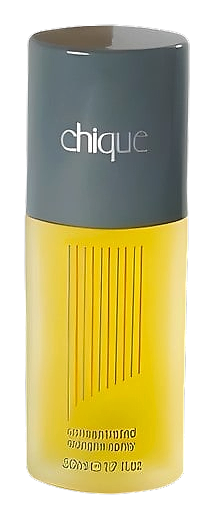
Chique presents itself as a quiet argument for the chypre structure: aldehydes bright and top-note assertive, florals at the center, and a mossy-woody base that pulls everything earthward. The name itself carries its own thesis. Chic, in French. Not fashionable, properly correct. The composition opens with aldehydes that announce themselves with a metallic sparkle, a characteristic that defines the initial impression. As that brightness settles, jasmine and rose emerge to anchor the heart, their floral warmth softening the metallic edge without erasing it entirely. The base builds slowly beneath these florals, oakmoss providing an earthy, green complexity while vetiver adds a dry, slightly smoky dimension.
Aldehydes are the compositional choice that makes Chique worth examining. Most florals of the era leaned into the opening, bright, immediate, done. Chique used aldehydes differently: as structural scaffolding rather than spectacle. They lifted the jasmine and rose, gave them air and brightness, without demanding attention themselves. The aldehydes exit early and leave the florals cleaner than they would have been alone. The base is where the house signature lives. Oakmoss has always been central to chypre architecture, and here it performs its role without apology, earthy, green, slightly bitter in the way that real moss smells when you turn it over. Vetiver amplifies this. Patchouli gives it weight.
The evolution
The aldehydes hit immediately, bright, almost sharp, with the kind of sparkle that announces itself without apologizing. Then the florals arrive. Jasmine first, then rose, but they're sharing space with aldehydes for a good twenty minutes, which gives the opening an unusual quality: simultaneously floral and metallic, clean and complex. Some people find this phase polarizing. Those who love it, love it deeply. The jasmine brings a creamy, indolic richness that tempers the aldehydic brightness, while the rose adds a soft, romantic warmth that prevents the combination from feeling too clinical. There's a tension in this opening phase that rewards attention, a push and pull between sharpness and softness that makes the fragrance feel alive. By the second hour, the aldehydes have dissipated enough for the heart to take full command.
Cultural impact
Chique places the aldehyde note firmly in the late-80s perfume vocabulary, while the mossy-woody base connects it to something older. The fragrance embodies a tension between its era and timelessness, using aldehydes in a way that was characteristic of the period while maintaining a structure rooted in chypre traditions. For collectors, this combination makes it a distinctive piece, a composition that speaks to both its moment of release and the broader history of perfumery. The aldehydic brightness signals contemporary taste, while the oakmoss and vetiver foundation grounds it in classical composition.