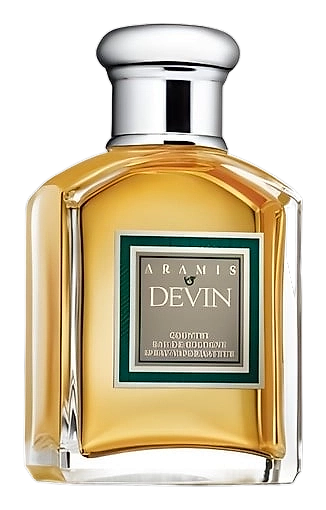

The Story
Why it exists.
The beginning
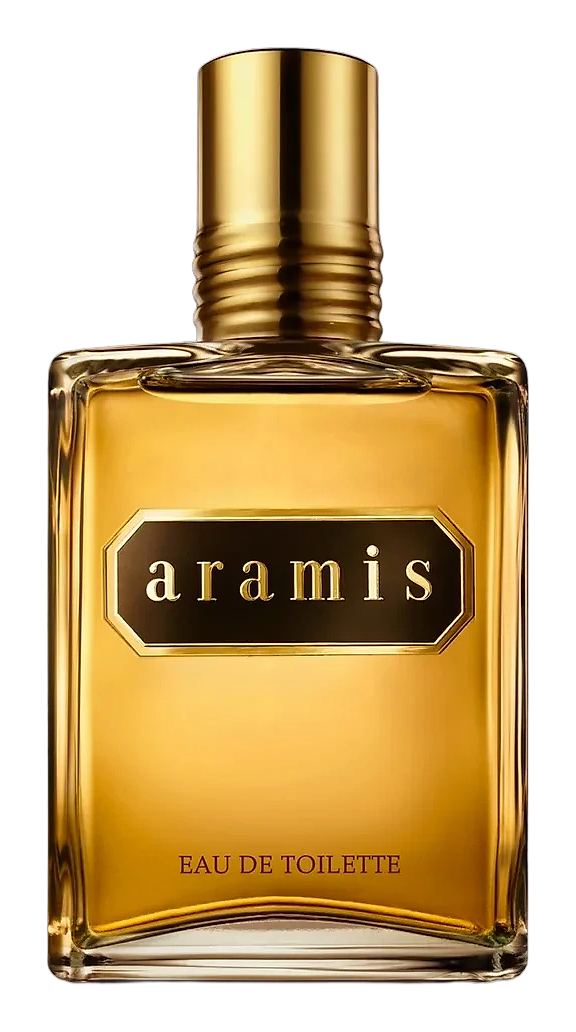
Devin arrived in 1977, the year after the original Aramis established the house's signature. Bernard Chant was the perfumer behind both. Where the 1964 original made its case through force, aromatic woods, leather, the assertion of presence, Devin took a different route. It was composed. Deliberate. The scent of a man who had already arrived and didn't need to prove it. The name itself carried that ease: Devin, a variation on the French devin, the seer, the one who knows without asking. That confidence became the brief. Not power as volume. Power as ease.
The aldehydes are the tell. In 1977, they were a signature move, that bright, almost effervescent lift that made citrus feel champagne-clear rather than just fresh. Bernard Chant paired them with galbanum, an herbaceous material that most perfumers used as a blender. Here, it became structural. It gave the top a green backbone that kept the aldehydes from floating away. The result is a classic masculine opening that has actual depth underneath the sparkle.
The evolution
The aldehydes arrive first, that bright, almost sparkling lift over lemon and bergamot. Galbanum grounds it immediately, giving the opening a green, slightly bitter counterweight that prevents it from feeling like aftershave. This phase holds for thirty minutes, maybe forty-five on dry skin. Then the florals arrive. Carnation and jasmine over stone pine needle, an unexpected combination that warms the composition without sweetening it. The transition feels like moving from a bright room into a paneled one. The drydown is where Devin earns its reputation. Leather and oakmoss settle close to the skin, with cedar, patchouli, and amber underneath. Labdanum adds a faint resinous warmth. The sillage moderates, this is not a fragrance that fills a room. It lingers at wrist level, a private handshake between you and whoever gets close enough to notice. Eight to ten hours on most skin types, quieter on the second day as musk and cedar remain.
Cultural impact
Devin won Fragrance of the Year, Men's Prestige at the Fragrance Foundation awards in 1978, one year after its launch. That recognition established it as a reference point for masculine fragrance in the American market, a composition other houses looked to when building their own masculine offerings.
The House
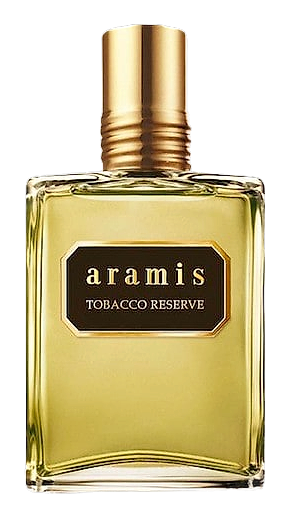
AramisAramis stands as a foundational name in American men's fragrance, established in 1964 by Estée Lauder as one of the first prestige men's grooming brands available in department stores. The original Aramis scent, created by perfumer Bernard Chant, introduced a signature blend of aromatic woods, leather, and traditional masculine notes that set the template for masculine fragrance in the American market. Over six decades, the brand has developed a portfolio spanning multiple expressions of masculine elegance, from the foundational 1964 original through contemporary interpretations like Tobacco Reserve in 2018. Aramis operates as a division within the Estée Lauder Companies, alongside its notable portfolio holding of Tommy Hilfiger Fragrances, acquired in 2003.
The Creator
Bernard ChantChant's signature lies in the patchouli powdered chypre, a structure he mastered with particular elegance. His compositions feature rich, complex layering where individual notes remain distinguishable even within dense formulations.