The Story
Why it exists.
The beginning
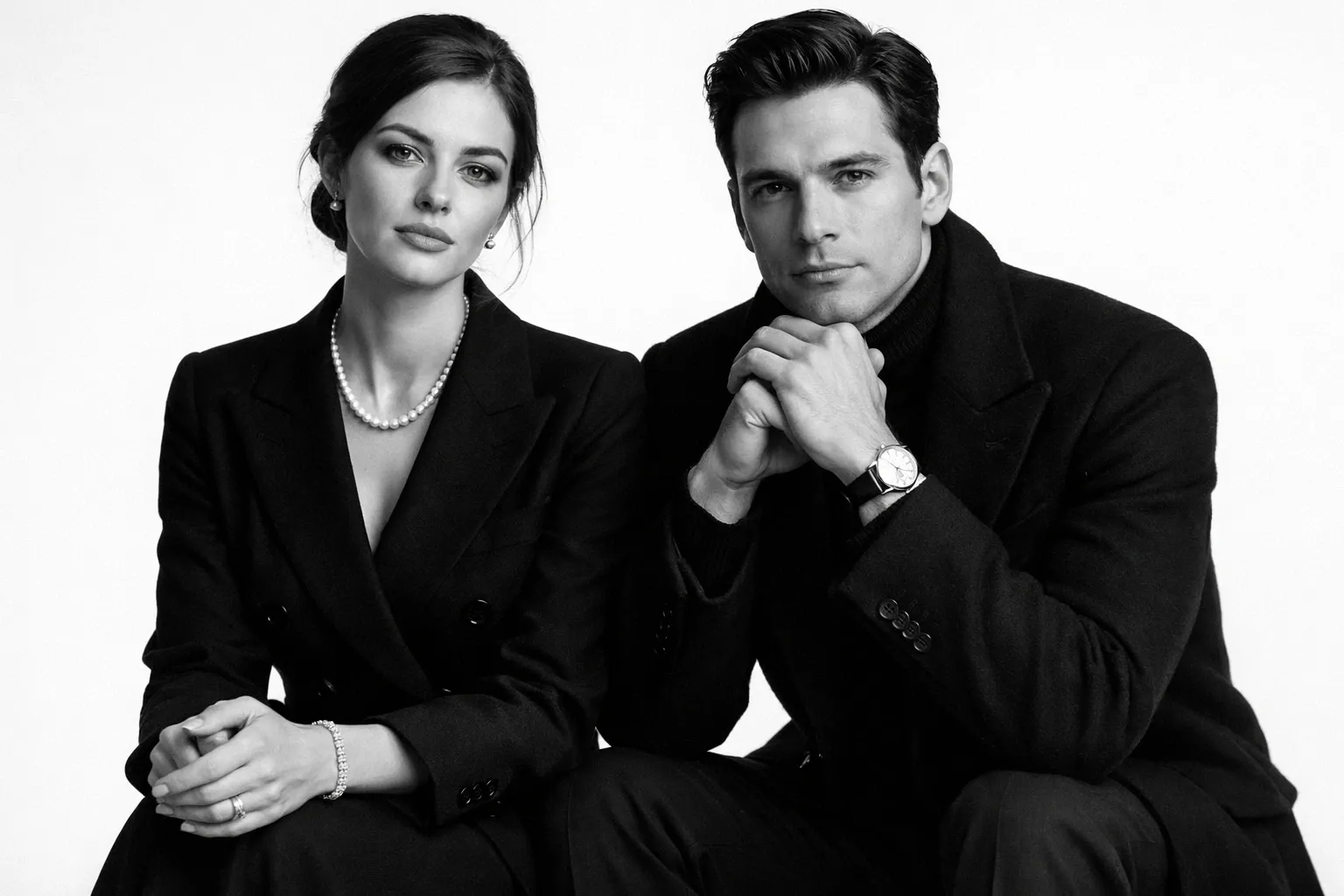
Grey Flannel arrived in 1975, composed by André Fromentin for a house that had built itself on quiet American menswear since 1963. Geoffrey Beene had built a fashion label on structure, restraint, and the idea that confidence doesn't shout. When the house entered perfumery, it brought that same philosophy: clothing as architecture, not ornamentation. The scent carries that same quiet authority, a composed presence that speaks through subtlety rather than volume. It doesn't demand attention, it earns it through restraint, through the kind of confidence that never needs to explain itself. The fragrance embodies the same measured approach that defines the Beene aesthetic.
Fromentin built the composition around a classic chypre structure, but structured around green and powdery rather than sweet and resinous. The opening blends bright citrus with galbanum's sharp green bite. The heart centers on violet and iris, lending that unmistakable powdery quality. The base anchors everything with oakmoss, cedar, and vetiver. The galbanum cuts through the powdery florals and keeps the whole thing sharp, green, and alive rather than soft and nostalgic. The tonka bean and almond in the base add a quiet sweetness that rounds the edges without sweetening the whole.
The evolution
The opening arrives fast, bergamot, neroli, lemon, and galbanum all at once. The citrus is bright and clean, but the galbanum asserts itself immediately, green and assertive, like crushed stems rather than ripe fruit. No softening here. The first twenty minutes are the most demanding. Then the heart takes over. Violet and iris arrive quietly, powdery and classic, and suddenly the whole composition reads differently, less aggressive, more composed. The floral heart holds for hours, softening but never disappearing. Eventually the base arrives: oakmoss, cedar, vetiver. The drydown is close to the skin, earthy and woody, the kind of presence that someone standing beside you might notice before someone across the room. What remains is a subtle aura, a reminder of presence without intrusion.
Cultural impact
Grey Flannel won Fragrance of the Year, Men's Prestige from the Fragrance Foundation in 1976, a remarkable early recognition for a house built on menswear philosophy rather than perfumery convention. It established the house as a reference point for green, powdery, woody compositions that valued structure and restraint over declaration.