
The Story
Why it exists.
The beginning
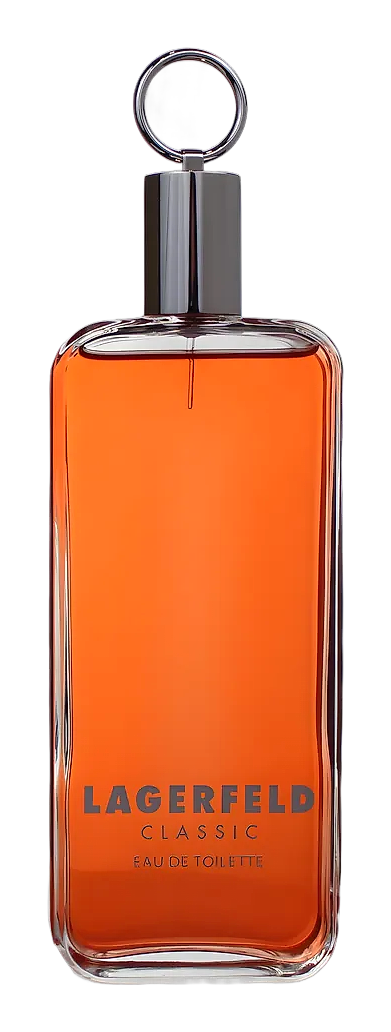
The collaboration between Ron Winnegrad and Karl Lagerfeld produced a fragrance that reflected the designer's sharp, editorial sensibility. Winnegrad built the composition around aldehydes that gave the initial burst a crystalline, almost metallic quality, establishing the refined foundation on which the rest of the fragrance would rest.
The note selection demonstrates a commitment to ingredients with inherent complexity. Basil is rarely used as a primary top note, yet here it serves as an intentional counterpoint to the conventional citrus opening. Iris requires careful handling to avoid appearing too powdery or flat, and its pairing with patchouli creates a heart that rewards close attention. Sandalwood and amber in the base provide the warmth necessary to balance the cooler top and heart, resulting in a fragrance that reads as complete rather than fragmented.
The evolution
The opening salvo of basil and bergamot establishes immediate aromatic clarity, the herb's green intensity balanced against the citrus fruit's brightness. As the top notes fade, iris rises with its distinctive powdery character, softened by the deep earthiness of patchouli. The progression moves from brightness to depth, from green to wood, culminating in a sandalwood and amber base that represents the fragrance's final, lingering statement.
Cultural impact
Lagerfeld Classic explores aromatic complexity and tobacco-forward compositions. The aldehyde note gives it a vintage signature that is familiar to some and completely novel to others. It offers a distinctive character within the landscape of masculine fragrances, appealing to those who value vintage masculine character. The composition draws on a rich tradition of aromatic ingredients while maintaining a unique point of view. The fragrance presents an interesting alternative to more straightforward masculine scents, with a complexity that rewards closer attention.