The Story
Why it exists.
The beginning
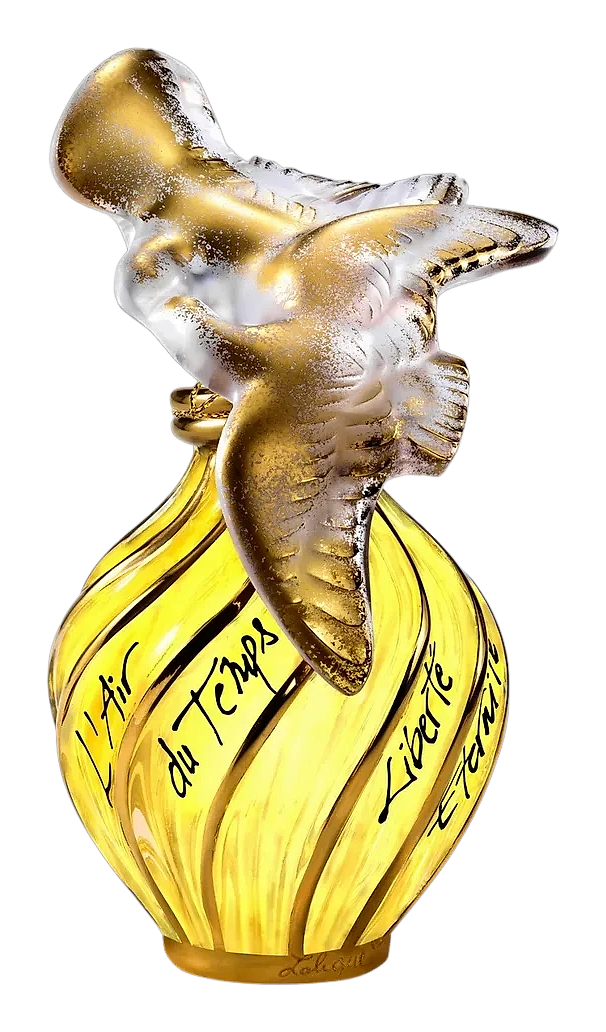
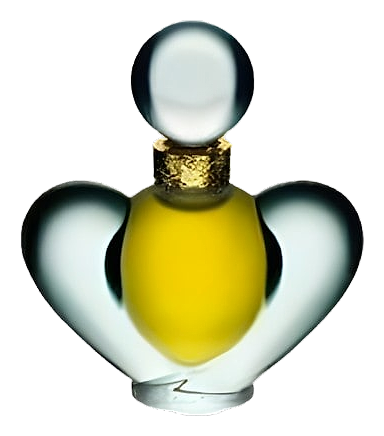
Michel Hy created Farouche in 1973 as a Parfum concentration, a deliberate choice that set it apart from the more common Eau de Toilette formats of the era. The name itself carries meaning: farouche, French for wild or untamed, suggests something that refuses to be tamed into conventional prettiness. Working with Nina Ricci's house aesthetic, Hy built a fragrance that honored the romantic femininity of the brand while pushing into stranger, more assertive territory. The Lalique bottle, a Marc Lalique design, reflected the house's long partnership with crystal craftsmanship, but the juice inside was anything but delicate.
What makes Farouche distinctive is the aldehydic structure paired with a floral heart that refuses to behave. Aldehydes give that classic waxy, almost champagne-bubble lift, a technique Nina Ricci had explored before, but here they meet galbanum, a green note sharp enough to cut through the sparkle. The heart doesn't soften after the opening. Carnation brings spice. Cardamom adds warmth. Iris provides powdery depth. It's a dense floral arrangement that argues with itself, held together by oakmoss in the base. The result is simultaneously powdery, green, and slightly animalic, a layered complexity that rewards attention.
The evolution
The aldehydes arrive first, bright, assertive, immediately recognizable as a 1970s composition. That champagne-bubble quality fades within the first hour as the galbanum and green notes settle. The florals then begin their slow takeover, with honeysuckle and lily of the valley softening the carnation's spice. The jasmine and rose emerge more fully, but they never become the dominant presence. By the second hour, the oakmoss takes over. The drydown is mossy, earthy, with vetiver and sandalwood providing warmth beneath. Musk adds a skin-close intimacy. On fabric, this fragrance lingers for days, a faint mossy, slightly animalic shadow that stays close to the wearer. The projection softens early, but the presence on skin remains.
Cultural impact
Farouche has been called a "weird floral chypre" by fragrance authority Michael Edwards, who lists it among the all-time greatest perfumes. That word "weird" is the key, Farouche was never trying to be safe. The aldehydic-floral-chypre structure Michel Hy constructed places it among the great vintage compositions, though discontinued status has made it increasingly rare. The fragrance rewards those who seek it out.