The Story
Why it exists.
The beginning
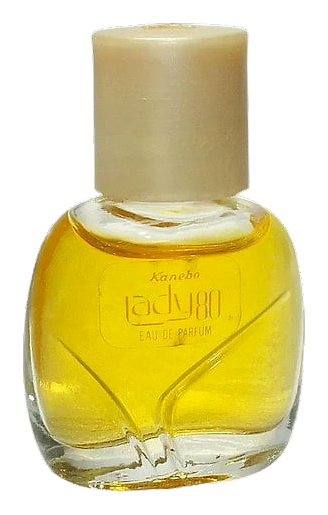
Lady 80 arrived in 1980, a Japanese release that took the aldehyde floral template and ran it through a particular kind of composure. The composition reads almost like a blueprint of what a floral aldehyde was supposed to be in that moment: green and sharp at the top, a wall of white and spicy florals through the heart, then a heavy, ambery, musky base with civet pulling the whole thing toward skin. The opening hits with that waxy, soapy brightness, the cold effervescent shimmer that aldehydes give a fragrance, layered over a green accord and a soft, sunlit peach note. You can feel the structural intent behind those top notes, they're not decorative, they're load-bearing.
What makes Lady 80 interesting is how many notes it stacks without losing shape. Nine florals in the heart, including narcissus and carnation, two ingredients that can collapse a composition into stew when they're not handled carefully. The aldehydes at the top do structural work, not just decorative sparkle. They hold the green and peach in place until the florals arrive, and they keep the whole opening from collapsing into either too-sharp green or too-soft fruit.
The evolution
The first ten minutes are all aldehyde. That cold, waxy, almost metallic brightness that reads as clean and slightly soapy, layered over green notes and a thread of bergamot. Hyacinth comes through sharp and watery, and the peach stays just barely sweet underneath, never sugary. It's brisk. It smells like cold air hitting a warm room. By the thirty-minute mark, the aldehydes have softened and the florals arrive in force. Lily of the valley and jasmine give it that cool white-floral sweetness, then carnation pushes in with its clove-spiced warmth, and narcissus adds a greenish, almost solar edge. The rose stays restrained. The whole heart is dense but not syrupy, more like a bouquet held at arm's length. Two hours in, the base takes over and this is where Lady 80 gets interesting. The sandalwood and cedar give it a soft woody backbone, the frankincense adds a smoky resin whisper, and underneath all of it, the civet and musk are doing something animal and warm against your skin. The raspberry is barely there, more a stain of color than a fruit.
Cultural impact
The aldehyde floral is a category with a long history, and Lady 80 sits as a Japanese take on it built during a period when the style still carried weight as a mainstream statement. The composition reads with the kind of confidence that comes from a fully loaded floral aldehyde: bright, soapy, waxy aldehydes on top, a dense white-and-spicy floral heart built around narcissus, carnation, magnolia, jasmine, rose, lily of the valley, lily, and iris, then a base of amber, musk, frankincense, raspberry, and civet that gives it warmth and a slight darkness underneath. The civet in the base is a key part of what gives the fragrance its character.