The Story
Why it exists.
The beginning
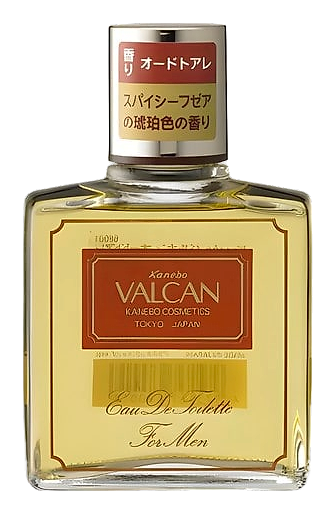
Valcan hit Japanese shelves in 1976, dropping into a decade when men's grooming was beginning to matter in new ways. Kanebo, the fragrance's parent and marketer, wanted a masculine composition that could speak fluently across cultures, holding something distinctly composed in its structure. The result was a woody-leathery eau de toilette that became one of the house's signature masculine releases, and reviewers continue to note that numerous other companies have borrowed from it in the years since. It's a quiet landmark that earned its reputation through the wearing, not the marketing.
The composition leans hard into the structural staples of classic masculine perfumery: citrus over a mossy, woody spine, with enough green bite to keep it from feeling dated. Carnation and basil do the heavy lifting in the heart, giving the scent a warm herbaceous lift that sits between fresh and formal. The interplay between bright top notes and a deeper, resinous base creates a deliberate tension, a push and pull between clean and composed, between green and sweet, that makes the formula feel considered rather than just dressed up.
The evolution
The first ten minutes are sharp. Bergamot, lemon, and lime cut through the aldehydes, giving a bracing, almost fizzy opening that reads very much like a 1970s cologne should. Basil and carnation arrive in the first hour, softening the citrus with a warm, slightly herbal floral lift that smooths the edges of the opening. Cedarwood and sandalwood settle in next, joined by oak moss and tonka, moving the composition deeper into its woody, grounded character. The drydown is warm and sweet-leaning, remarkably durable across a long day of wear, with the base notes lingering in a close, well-blended trail. It behaves like a classic masculine composition that learned restraint early and never forgot it.
Cultural impact
Valcan earned its place through the years after its release, the kind of scent other fragrance houses watched closely and drew from when building their own masculine offerings. Reviewers have pointed to it as a model that numerous companies borrowed from in shaping their own takes on the genre. Its discontinuation later shifted it into vintage territory, where it now sits as a documented piece of 1970s Japanese masculine perfumery, collected and worn by people who came to it after the fact as much as those who knew it at launch.