
The Story
Why it exists.
The beginning
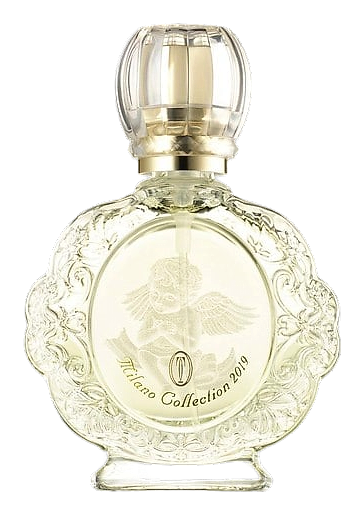
Coronation Bell isn't new. It's a ghost brought back. According to available records, the composition traces back to 1964, though the details of that original release sit somewhere between documented history and fragrance lore. The house let it fade into the archives for a long stretch, and the formula slipped out of circulation. Then in 2019, for the enthronement of Emperor Naruhito, Kanebo reached into that history and reconstructed it. Not a reissue so much as a resurrection, pieced together from whatever residual information survived in vintage bottles and old marketing records. The timing was deliberate. A new imperial era in Japan called for something that honored continuity, something with a longer memory than the moment.
What makes Coronation Bell unusual is its restraint. Most white floral compositions chase volume. This one builds around three notes, lily of the valley, jasmine, and rose, and refuses to layer anything louder on top. The green sharpness of muguet grounds the jasmine's indolic edge, and the rose ties them together without tipping into syrup. It's a study in how much a classic floral can say when it stops trying to impress.
The evolution
The first half hour is all lily of the valley, green and almost dewy, the kind of opening that feels like pushing through wet grass. There's a faint metallic edge to it, like cool air on stone. Then the jasmine arrives, not the dense, almost narcotic jasmine of a tropical night, but something leaner, with a tea-like quality. The two florals circle each other for a while, neither quite yielding to the other, and the green of the lily seems to sharpen the jasmine rather than soften it. By the second hour, the rose has settled into the middle of everything. It doesn't dominate so much as smooth the transitions between the green top and the warmer base that's forming underneath. The rose here reads less like a bouquet and more like a petal crushed between fingers, dry and slightly waxy.
Cultural impact
Coronation Bell exists as a gesture more than a product. Released in 2019 to mark Emperor Naruhito's enthronement, it carries the weight of a national moment without performing it. The composition is old-fashioned in the best sense, a white floral that sources trace back to 1964, reconstructed and offered during a modern ceremony. It's the kind of release that rewards someone interested in the quieter side of Japanese fragrance history. The fragrance speaks to a tradition of commemorative perfumery, compositions created to mark specific occasions rather than chase trends. Coronation Bell sits firmly in that lineage.