
The Story
Why it exists.
The beginning
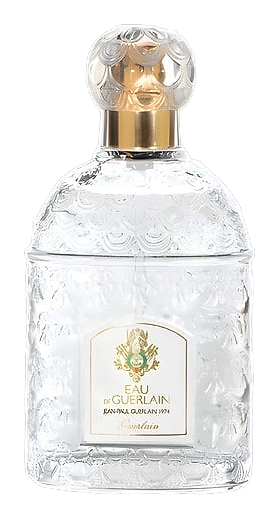
Jean-Paul Guerlain created Eau de Guerlain in 1974. The fragrance is built on contrast, cool herbs against warm wood, bright citrus against the Guerlain house signature that threads through everything the family has ever made. It's a cologne that treats its brief seriously, one that carries the weight of the house name with something closer to confidence than caution. This one lives up to it.
The structure is what makes it interesting. Most colognes from any era open bright and disappear, a citrus flash, a few hours of nothing. Eau de Guerlain doesn't play that game. The opening is a genuine composition: lemon and bergamot bright enough to read as effortless, then basil and petitgrain shifting the register toward something herbaceous and almost savory. Caraway adds a quiet aniseed undertone that most people never identify but everyone feels, a subtle warmth beneath the cool herbs that stops the whole thing from reading as just 'fresh.' It's the difference between a cologne and a fragrance, and that difference is everything.
The evolution
The opening arrives crisp and immediate, lemon, bergamot, and the herbal lift of basil arriving almost simultaneously. Petitgrain adds a slightly bitter, floral citrus edge that grounds the brightness. The caraway surfaces quietly in the first twenty minutes, giving the citrus something to lean against. Within an hour, the heart takes over, carnation and jasmine bloom warm and spicy, the rose providing softness without sweetness. The sandalwood is the quiet architect here, pulling everything toward that signature Guerlain warmth. By hour two, the herbs have softened, the citrus has faded, and what's left is oakmoss, vintage, slightly powdery, and entirely intentional. Musk and amber hold the base together, keeping the drydown close to skin rather than projecting outward. It's present without announcing itself, never loud, and the sillage stays moderate throughout wear.
Cultural impact
Part of Guerlain's Les Colognes collection, Eau de Guerlain has earned a devoted following precisely because it doesn't try to impress you. It simply smells right, citrus that evolves rather than evaporates, a warm Guerlain base that makes the whole thing feel considered rather than composed. Those who encounter it often find themselves returning, drawn by the way it balances brightness with depth, immediacy with longevity. The fragrance occupies a special place for anyone who appreciates restraint over spectacle, finding power in precision rather than volume.
The House
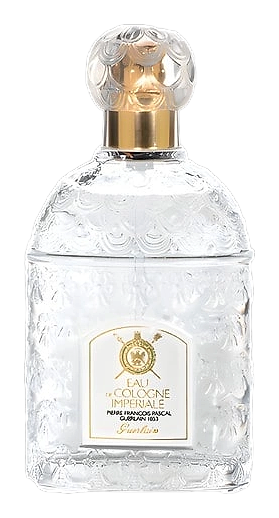
GuerlainGuerlain stands as one of the oldest and most revered perfume houses in the world, founded in Paris in 1828 by Pierre-François-Pascal Guerlain. What began as a boutique on rue de Rivoli quickly became the preferred destination for Parisian society, attracting dandies and elegant women who sought custom-crafted fragrances. The house's influence grew to such heights that Guerlain earned the title of Official Perfumer to Napoleon III after presenting Eau de Cologne Impériale to Empress Eugénie as a wedding gift in 1853. This royal patronage marked the beginning of Guerlain's enduring association with European aristocracy, as the house went on to create fragrances for Queen Victoria and Queen Isabella II of Spain. Today, under the creative direction of Thierry Wasser, the fifth-generation perfumer, Guerlain continues to shape the landscape of fine fragrance with a portfolio spanning over 1,100 olfactory creations. The house remains headquartered at its legendary Champs-Élysées mansion, a historic monument that anchors Guerlain's position at the intersection of heritage and contemporary luxury.
The Creator
Jean-Paul GuerlainJean-Paul Guerlain's style resists easy categorization, though richness and depth define nearly every composition. He favored opulent oriental structures, warm woods and resins, and florals treated with almost sculptural precision.