The Story
Why it exists.
The beginning
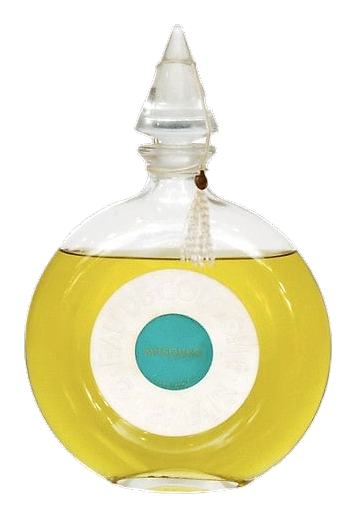
Guerlain, founded in Paris in 1828, held the title of official perfumer to Napoleon III, establishing a legacy of opulent, precise craftsmanship. Jacques Guerlain composed Mitsouko in 1919, naming it after a character from Jacques Boulgins 1905 novel. Mitsouko, wife of Japanese Admiral Togo, waits in a silent house while two men she loves march toward war. The story ends in tragedy for everyone except the fragrance itself. Guerlain captured her composure under duress in scent, building a composition that begins with bright citrus elegance and gradually deepens into something more somber and resolved.
The note structure reflects a philosophy of contrast and resolution. The opening uses bergamot and citrus fruits to establish immediate brightness, a necessary counterpoint to the heavier base. Jasmine and rose bridge the transition, their floralcy softening the citrus edge before the heart arrives. Peach and ylang-ylang form the emotional center, warm and languid, while lilac adds a powdery vintage touch. The drydown, built on oakmoss, vetiver, ambergris, and cinnamon, provides the weight and longevity that define Mitsoukos character as a true chypre. Each layer serves a purpose: the bright notes create expectation, the heart creates desire, and the base creates permanence.
The evolution
The fragrance opens with a brisk citrus-floral burst, bergamot and citrus fruits cutting through with immediate clarity while jasmine and rose introduce a refined floral presence. Within the heart, peach takes center stage, its ripe sweetness softened by ylang-ylang and lilac, creating a languid, warm center that feels both intimate and composed. As hours pass, the drydown reveals the true architecture: oakmoss providing the classic chypre mossiness, vetiver grounding the composition in earth and smoke, ambergris lending a subtle animalic depth, and cinnamon arriving last to leave a faint warm trace on the skin. The arc moves from bright composure to quiet resilience.
Cultural impact
Mitsouko occupies a particular place in perfumery history, one of the foundational compositions of the chypre category, cited as reference and inspiration for countless fragrances that followed. Its peach-forward structure was unusual in 1919 and helped expand what a classic fragrance could contain. Today it draws both devoted followers who return to it repeatedly and newcomers discovering it for the first time, a rare quality for a century-old composition.