The Story
Why it exists.
The beginning
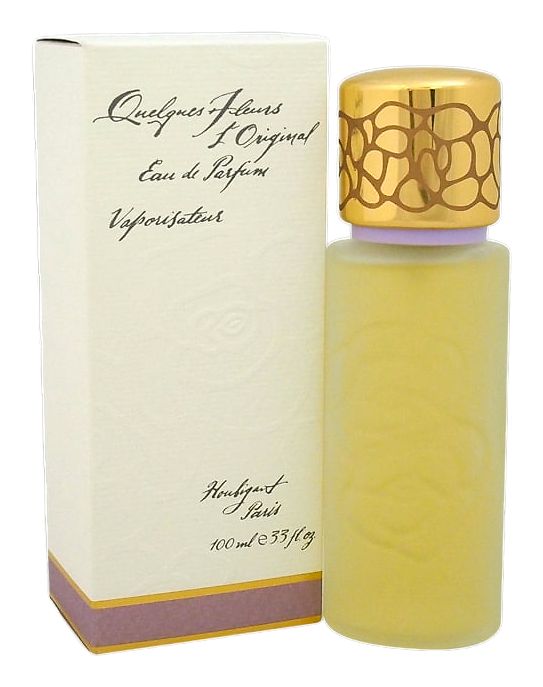
Robert Bienaimé created Quelques Fleurs in 1912 for Houbigant. The brief was simple: build a white floral that didn't behave. The result was a pyramid stacked with twelve heart notes, jasmine, tuberose, lilac, lily of the valley, rose, ylang-ylang, violet, heliotrope, iris, orris root, orchid, carnation, arranged not as a list but as a chorus where every voice amplifies the others. Houbigant gave their perfumer the latitude to construct something elaborate, and Bienaimé delivered a composition that refused to choose between elegance and audacity.
The powdery floral structure is what makes this work. Multiple white florals layered together create something none of them could achieve alone, jasmine adds body, tuberose brings creaminess, lilac contributes a slightly green sweetness, and lily of the valley keeps everything graceful. The honey accord threading through the base doesn't just sweeten the drydown, it binds the wild floral heart to the powdery finish, making the whole composition feel intentional rather than scattered. Oakmoss and civet anchor it with that classic chypre depth, the kind of animalic warmth that distinguishes a grand old floral from a polite modern one.
The evolution
The opening hits crisp and green, bergamot, lemon, orange blossom sharpened by tarragon. Green notes give it a snap before the florals arrive. Within minutes, jasmine and tuberose rise to the surface, surrounded by lilac, lily of the valley, rose, and ylang-ylang. The heart is dense, lush, and unapologetically floral. Carnation adds a spice that keeps it from becoming saccharine. As it settles, honey and vanilla warm the base while musk and civet introduce an animalic depth that grounds the florals. Sandalwood and oakmoss bring the classic chypre structure, the kind that lingers close to the skin for hours after the initial bloom fades.
Cultural impact
Quelques Fleurs occupies a specific corner of fragrance history, the elaborate white floral with powdery depth and animalic warmth. It was built for someone who wanted scent to announce itself, not whisper. In a century of releases, it remains the reference point for what a grand Parisian floral can be.