
The Story
Why it exists.
The beginning
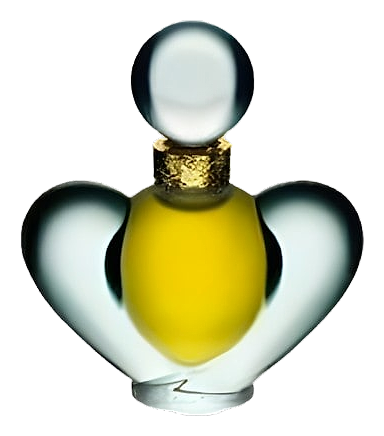
In 1946, Nina Ricci turned to Germaine Cellier for a commission that would mark the house's entry into fragrance. Coeur Joie, which translates roughly to "heart of joy," arrived as one of Ricci's earliest scents, introducing the couture house to a new creative medium. Cellier, working in the perfumery world of mid-century Paris, built a composition around iris and violet, materials that had long fascinated the city's nose community. The result was a floral with weight and lift, something that bridged classical French perfumery with a more modern sensibility. Coeur Joie predates L'Air du Temps and exists as a quieter, lesser-known sibling in the Nina Ricci catalogue, beloved by those who stumble onto it and immediately wonder why it isn't discussed more often.
Iris anchors the composition with its dense, rooty character, a note that carries the heft of soil and stone beneath its powdery surface. Cellier leaned into that weight, building the heart around violet and jasmine, then capping it with neroli for lift. The interplay between violet's nostalgic sweetness and neroli's bitter brightness creates an appealing tension, keeping the composition from settling into anything too pretty. Violet brings a soft, almost cosmetic warmth, the kind of sweetness that recalls face powder and vintage dressing tables, while neroli slices through with green citrus.
The evolution
The opening belongs to neroli and bergamot, which read almost cologne-like, citrus and green, bright and uncomplicated. There's a clarity to the first few moments that feels distinctly mid-century, clean and refreshing without any of the aquatic sharpness that would later dominate perfumery. Then the iris shows up, and the whole composition changes register. What felt like a confident opening becomes something hushed and powdery, violet layering in alongside jasmine for a dense floral heart that lingers through the middle stretch. The iris doesn't arrive with fanfare; it simply takes over, replacing the citrus brightness with a softer, more contemplative mood. Violet weaves through the iris, sweet and slightly melancholy, while jasmine provides an indolic undertone that keeps the floral heart from feeling flat.
Cultural impact
Coeur Joie is the fragrance from before Nina Ricci became widely known as a fragrance house. The brand's later fame, particularly through L'Air du Temps, has cast Coeur Joie into an interesting light: an early composition from the same house that would soon become a global name. It's a curious position for a perfume, existing as something of a prelude rather than a standalone statement. Those who encounter Coeur Joie today often describe it as a discovery, a scent that feels familiar in its floral language but distinct in its execution.