Germaine Cellier
Germaine Cellier was born in Bordeaux in 1909, the daughter of a bohemian father and a grandmother who worked as an herbalist. Scent was not abstract to her—it was household medicine, culinary logic, and mystery woven into daily life. After primary school, she moved to Paris and trained as a chemist, eventually landing a position at Roure Bertrand Dupont, a key supplier whose laboratory doubled as a finishing school for the industry's next generation of noses. Women in French perfumery were rare in the 1930s. Cellier arrived anyway, and she stayed. By the mid-1940s she had built a reputation for compositions that refused to behave—bold, discordant in the best way, assembled from fewer materials than her contemporaries used. She worked primarily with Robert Piguet, creating the house's defining fragrances, and later with other houses that needed someone willing to break structure for effect. Her career spanned roughly four decades of active creation before her death in 1976.
The hits
Notable creations


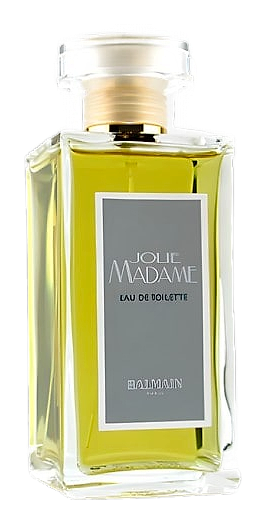





The signature
How Germaine composes
Cellier was drawn to sharp contrasts. She favored green and chypre structures, coumarin for its metallic bite, and heavy synthetics at a time when many perfumers treated them as necessary evils rather than building materials. Her fragrances tend to open abruptly and hold their ground rather than dissolve into softness. Animalic notes appear often—not as background warmth but as structural supports. She liked jasmine, but she liked it when it had teeth. Her compositions are short by industry standards, typically under fifty ingredients, which made each material carry more weight.
Philosophy
What drives Germaine
Cellier believed a fragrance should make a statement and then get out of the way. She resisted the elaborate formulas that were standard practice, arguing that complexity often masked a lack of point of view. Her approach was confrontational by design—if a composition could be described in one breath, she had done her job. She brought an instinct for drama to every project, whether the result was animalic and dark or unexpectedly green. She trusted her nose over convention and had no patience for what she called the ornamental excess that plagued the industry.
The houses
Maisons Germaine composes for
In the same league