
The Story
Why it exists.
The beginning
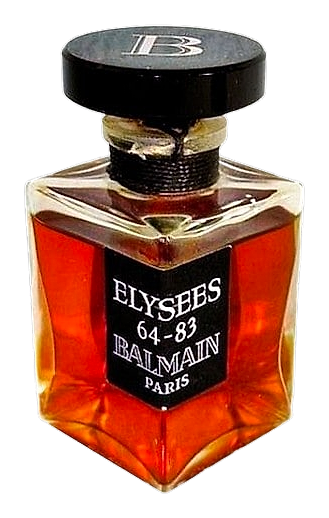
In 1946, shortly after the liberation of Paris, Pierre Balmain asked Germaine Cellier to create a fragrance he could dab on his business cards. She delivered something more interesting than a calling card: a perfume named after the house's own telephone number, Elysees 64-83. It was not meant to sell. It was meant to exist alongside the couture, to accompany a woman into rooms without announcing her arrival. Cellier, one of the rare female noses working in French perfume at the time, built it with the restraint of the era, no fruit, no spice, no warmth seeking warmth. Just aldehydes, lavender, and a foundation of oakmoss and ambergris that made it architectural. The name itself is a timestamp: a phone number that no longer rings, preserved in liquid form.
What makes Elysees 64-83 structurally interesting is the lavender. In most powdery florals of this era, lavender functions as a bridge between heart and base, but here it acts as the load-bearing wall. The aldehydes provide the initial shimmer, citrus barely registers, then lavender takes over and holds. Everything above it (rose, jasmine, geranium) arrives powdery and cool, everything below (leather, vetiver, oakmoss, civet) grounds it with mineral earth and animalic warmth. The result is a fragrance that generates heat through restraint, not sweetness. Vanilla appears in the base but refuses to soften. The civet and ambergris don't flirt, they settle.
The evolution
The aldehydes arrive bright and sharp, citrus barely a suggestion before chamomile adds its faintly medicinal cool. The aldehydes don't linger, they're the handshake, then they're gone. Within minutes, lavender establishes itself as the structural spine, with geranium cooling the herbal edge and rose holding back its romance. Jasmine drifts through the wildflowers quietly, never pushing. This is a powdery floral that stays powdery, refusing to bloom into sweetness. The drydown is where Elysees 64-83 makes its real argument. Leather and patchouli emerge alongside vetiver's mineral earth, ambergris adding warmth without sweetness, and then, the civet. That animalic warmth settles close to the skin, grounding everything in something raw and real. Oakmoss provides the mossy, dry finish of a classic chypre, while orris root and musk linger as a powdery, skin-close warmth that holds for hours. This is the part that stays. The part you'd find on a scarf the next morning.
Cultural impact
Elysees 64-83 is a survivor, not through popularity, but through stubbornness. Discontinued decades ago, it persists in the collections of those who seek out pre-reformulation chypres. It belongs to a generation of perfumes that understood elegance as restraint: no fruit, no sweetness, no warmth seeking warmth. For those who collect or study the architecture of classic French perfumery, Elysees 64-83 represents an unrepentant artifact of its era, a powdery floral built on lavender and aldehydes, held together by civet and oakmoss, refusing to soften for modern sensibilities.