The Story
Why it exists.
The beginning
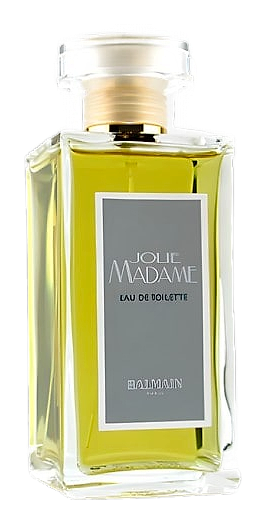
Germaine Cellier created Jolie Madame in 1953 as a statement of Parisian authority. The name carries a certain irony, 'pretty lady' suggests soft prettiness, but Cellier composed something that refused to be demure. She designed it for a woman who understood that elegance doesn't require apology. The couture houses of post-war Paris were building empires of silk and structure, and Cellier wanted a fragrance that matched that ambition step for step. Not delicate. Not decorative. A fragrance that walked into a room and made it hers.
What makes this composition remarkable is the tension between softness and severity. Gardenia and tuberose are ingredients that can tip into cloying sweetness, Cellier knew this and refused to let them. Instead, she anchored them in leather, civet, and oakmoss, materials that impose structure without dulling the bloom. The white florals don't float; they breathe. They're held accountable by the earth and animalic notes beneath them. It's a trick that requires confidence, and Cellier had it in abundance.
The evolution
The opening announces itself immediately, bergamot's citrus brightness followed quickly by artemisia's herbal cut. Gardenia arrives within minutes, its creaminess arriving like a counterargument to the sharpness. Then the leather arrives, not as an accent but as a foundation. The heart unfolds over the next several hours: jasmine, rose, and tuberose blooming in sequence, but the leather and oakmoss already anchoring them. The leather never relents. Not sharp, more the warmth of well-worn gloves, a library's leather chairs, something lived-in and deliberate. Civet and musk emerge around the second hour, giving the white florals a skin-warm quality rather than a floral-shop sweetness. The drydown stretches across hours on most skin types, with oakmoss and civet lingering as the defining signature, the kind of presence that remains in a room after she's already left.
Cultural impact
Jolie Madame helped define the chypre category in the 1950s, a decade when perfumery was establishing its own language of sophistication. As one of Balmain's earliest fragrance statements, it set the tone for a house that would continue building olfactory narratives alongside its couture collections. The fragrance remains a reference point for leather-chypre compositions, not because it pioneered the category, but because it executed it with an authority that still resonates.