The Story
Why it exists.
The beginning
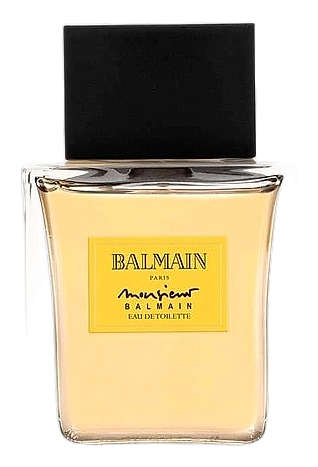
Monsieur Balmain arrived in 1964, a deliberate statement from a house that understood the power of restraint. Germaine Cellier, one of the great noses of the century, built this around a lemon that wasn't interested in being liked. It was interested in being remembered. The name said everything: Monsieur, not just man. The title of respect. The fragrance that came before the brand's more recent reinventions through Balmain Beauty, a bridge between couture precision and masculine olfactive tradition.
What makes this composition unusual is the way the citrus doesn't dissipate. Where most lemon openings are a brief brightening before the real fragrance begins, Cellier anchored hers to an aromatic backbone of basil and lavender that keeps the citrus honest. The heart introduces lemongrass and carnation, a pairing that sounds discordant on paper but reads as clean heat on skin, like spice without fire. The base isn't a soft landing. Cedar, leather, oakmoss, patchouli. A chypre structure that gives the whole thing weight and duration.
The evolution
The opening hits with lemon and bergamot, sharp and immediate. Basil and lavender arrive within minutes, threading green through the citrus so it doesn't read as sweet or casual. The top notes hold for roughly 30 minutes before the handoff to lemongrass and ginger in the heart. Carnation and cyclamen appear here too, unexpected florals that keep the masculine structure from reading as austere. By the second hour, the base takes over: cedar and leather, with oakmoss and patchouli providing the green-earth depth that holds everything together. On most skin, the drydown lasts into the evening. On fabric, it lingers until the next wash.
Cultural impact
Monsieur Balmain arrived in 1964 as one of the earliest masculine expressions from the Balmain house, a period when fragrance houses were still establishing their identities in the growing men's market. Created by Germaine Cellier, the same perfumer behind the legendary Fracas, Monsieur Balmain represented a calculated move by the fashion house to extend its refined aesthetic into the masculine sphere. The 1964 release coincided with a cultural moment when men's grooming was becoming increasingly sophisticated, and classic citrus-aromatic structures were the dominant vocabulary for masculine scent.


















