
The Story
Why it exists.
The beginning
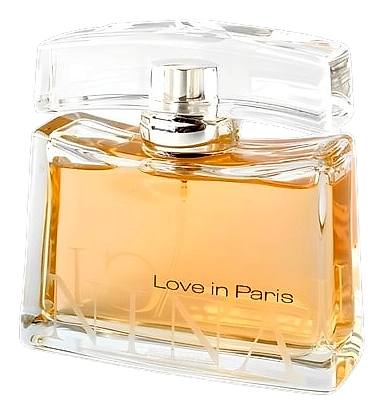
Love In Paris arrived in 2004, when Aurélien Guichard, then a rising name in French perfumery, set out to capture something specific: the feeling of falling in love in Paris. Not the postcard version. The real one, slightly disorienting, unexpectedly sharp at moments, then suddenly, completely soft. He built the composition around star anise and bergamot, a pairing that wasn't safe, then layered in the peony and rose that the house was known for. The result was a fragrance named for a city and a feeling simultaneously.
What makes this composition stand apart from the typical fruity-floral is the anise. It keeps the sweetness accountable, prevents it from tipping into syrup. The apricot note, velvety and warm, gives the peony and rose more body than they usually carry in commercial fragrances. And the vanilla doesn't dominate the drydown; it whispers. Warm, but not dessert. The whole thing reads as romantic without being predictable, exactly what happens when someone uses a polarizing note as a feature rather than hiding it.
The evolution
The opening announces itself in about fifteen minutes, bergamot bright, then star anise arriving like a green, almost medicinal snap. That licorice quality lingers just long enough to become the fragrance's signature rather than a gimmick. The heart takes over smoothly: peony and rose bloom fuller, the apricot note adding a soft, edible warmth that most wearers find themselves drawn to. By hour three, the florals have settled into the skin. Musk and vanilla carry the drydown, not loud, not projecting far, but present. Warm. Skin-close. The longevity outlasts what you'd expect from a 2004 commercial floral, holding moderate sillage through most of a workday.
Cultural impact
Love In Paris became one of Nina Ricci's most accessible fragrances, a entry point to the house for a generation of wearers who discovered it through department store counters in the mid-2000s. Among its sister fragrances, it stands apart for the anise note, which divides opinion in exactly the way that makes a scent memorable. It's been in continuous production since 2004, which is rare for a commercial release that wasn't positioned as a blockbuster. Wearers who return to it tend to describe it as 'exactly what I picture when I think of a romantic floral', which is both its strength and its limitation.