The Story
Why it exists.
The beginning
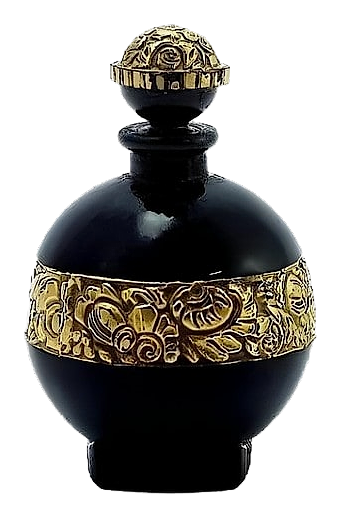
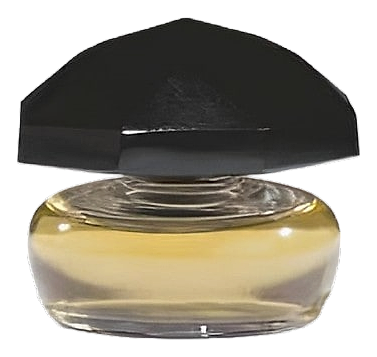
Le Bouquet de Gabilla arrived in 1912. The name is unadorned and direct, almost an announcement: the bouquet, Gabilla's bouquet, her signature gathering. The early output of the house is documented through individual creations, each one titled with a directness that suits the period. This one belonged to the simplest category. It was a posy, a generous handful, an arrangement. Gabilla worked in a tradition that valued coherence over abstraction. Le Bouquet was conceived as exactly what it was called: a composed floral that owed nothing to invention. Every bloom had a place. Nothing masked. Nothing shouted. The fragrance reads as a single gesture, a gathering of petals bound together with the kind of intention that trusts the materials themselves.
What makes Le Bouquet de Gabilla worth pausing on is its restraint. The composition reads as a single gesture: many flowers, one voice, a ribbon tying them together. There is intellectual satisfaction in that economy. It trusts the materials. It assumes the wearer can hold attention without volume. The fragrance wears with a quiet confidence that rewards proximity. From the first moments, there is an impression of gathered petals still cool from morning, the kind of scent that clings to fingers after handling cut stems.
The evolution
The opening arrives already composed, a soft press of petal and leaf that suggests flowers before any single one can be named. There is no sharp burst, no chemical crackle. The first moments feel like leaning into a bunch of flowers someone just handed you, stem-side, dewy. The air around the wrist holds a green coolness, the scent of crushed stems and cool water, a vegetal sweetness that hasn't yet committed to any particular bloom. The heart unfolds slowly. Flowers settle into the space with the patient confidence of materials that don't need to compete. One bloom yields to the next without any of them stepping forward to claim the spotlight. The accord feels generous, full without being heavy, an arrangement that holds its shape rather than dissolving into abstraction.
Cultural impact
Le Bouquet de Gabilla now circulates primarily among collectors and vintage perfumery enthusiasts, which has shaped its footprint. It is a reference piece rather than a household name, sought out by those interested in the traditions of composed florals and the history of French perfume houses whose output has become scarce. The fragrance occupies a particular place in the memory of early 20th-century perfumery, valued for what it preserves rather than for any dramatic innovation. It is the kind of work that endures quietly, held in esteem by a small but dedicated audience who appreciate the patience of its construction.
The House
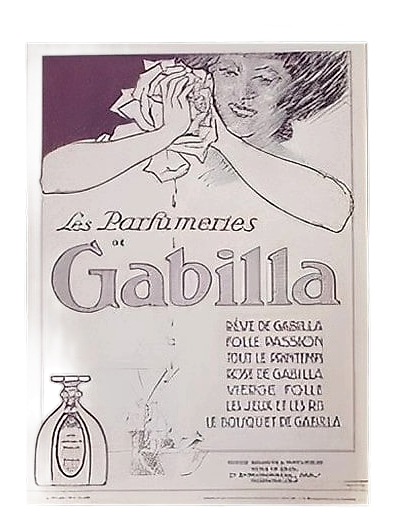
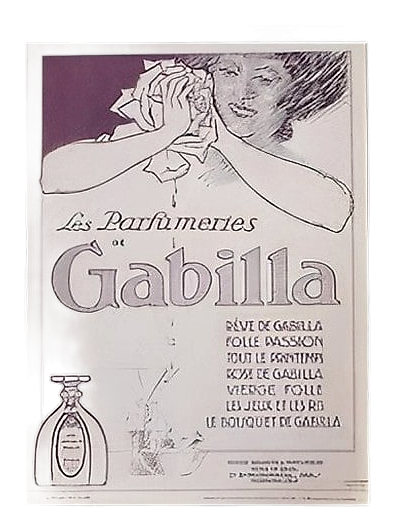
GabillaGabilla is a Parisian perfume house founded in 1910 by Madame Henriette Gabilla, a Syrian‑born pioneer who began blending scents in the late 1880s. Over five decades the atelier released more than eighty fragrances, many of which bear the year of their launch in their title. The brand’s catalogue reads like a chronicle of early‑20th‑century French perfume, with classics such as Violette (1912), Lilas (1922) and La Vierge Folle (1929) still cited by collectors. Gabilla’s legacy rests on a quiet confidence: a modest boutique on rue Edouard VII, a steady output of refined compositions, and a reputation built on craftsmanship rather than flash.
The Creator
Henriette GabillaGabilla favored layered constructions that unfolded over time. She began with a clear, luminous top, often built from citrus or green notes, then introduced a heart of rose, jasmine, or oud that lingered like a whispered secret.