The Story
Why it exists.
The beginning
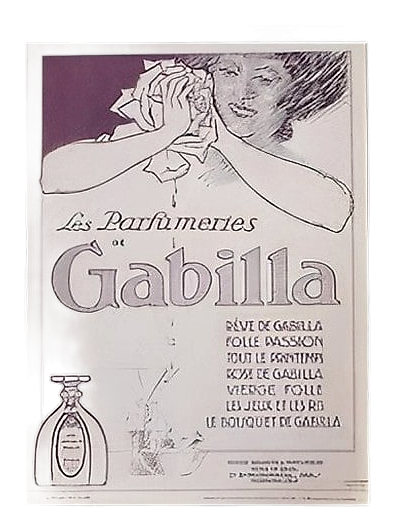
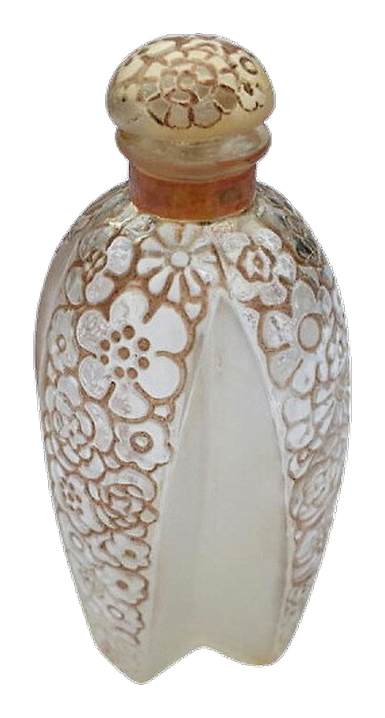
Henriette Gabilla released Les Jeux et Les Ris in 1910, and the early wave of releases under her name reads as quietly confident from the outset. The title translates loosely as "The Games and the Laughter," a phrase that some believe traveled forward from an earlier rebrand of the same fragrance, though the original context behind that name shift is not well documented. What the 1910 release did establish was a house tone: compositions that do not announce themselves so much as keep you company, that prefer the corner of a room to the center of one. What survives in the writing about this period is the sense that Gabilla understood composition as a study in restraint.
What makes the composition structurally interesting is how little it demands of each phase. Rather than a bold overture, the opening behaves like a held breath: present, but never declarative, more a question than a statement. The fragrance reveals itself in stages, each one quieter than the last, and none of them attempt to overshadow what came before. There is a confidence in that approach, the kind that trusts the materials to carry themselves without being pushed to the front of the room.
The evolution
On skin, Les Jeux et Les Ris begins within a delicate veil that seems almost hesitant, a soft top note that is brief but never abrupt, the kind of opening that feels like the first line of a letter rather than the title of a book. The first thirty minutes carry that quality of light formality, the scent of someone choosing their words carefully, asking a small favor of your attention without demanding it. Nothing here announces itself. Nothing here rushes. By the end of the first hour, the composition starts to feel less like a fragrance and more like a memory, the kind that surfaces unprompted in the middle of an ordinary afternoon. The heart of the piece holds this territory through the second and third hours, neither blossoming nor fading, simply turning slowly, the way a page turns when read aloud to a quiet room. No single note dominates.
Cultural impact
Les Jeux et Les Ris sits in a particular corner of early perfumery: compositions that prioritize intimacy over declaration, that prefer the second sniff to the first impression, that reward the wearer who lingers rather than the one who walks past. Its discontinued status has sharpened its reputation among those who treat the early twentieth century as a serious field rather than a costume shop, and the fragrance now circulates among collectors and historians who read the period for its substance.
The House
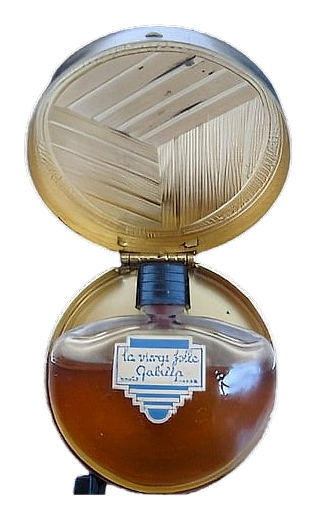
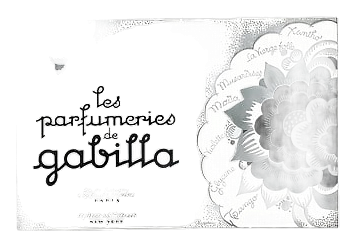
GabillaGabilla is a Parisian perfume house founded in 1910 by Madame Henriette Gabilla, a Syrian‑born pioneer who began blending scents in the late 1880s. Over five decades the atelier released more than eighty fragrances, many of which bear the year of their launch in their title. The brand’s catalogue reads like a chronicle of early‑20th‑century French perfume, with classics such as Violette (1912), Lilas (1922) and La Vierge Folle (1929) still cited by collectors. Gabilla’s legacy rests on a quiet confidence: a modest boutique on rue Edouard VII, a steady output of refined compositions, and a reputation built on craftsmanship rather than flash.
The Creator
Henriette GabillaGabilla favored layered constructions that unfolded over time. She began with a clear, luminous top, often built from citrus or green notes, then introduced a heart of rose, jasmine, or oud that lingered like a whispered secret.