






The Heritage
The Story of Gabilla
Gabilla is a Parisian perfume house founded in 1910 by Madame Henriette Gabilla, a Syrian‑born pioneer who began blending scents in the late 1880s. Over five decades the atelier released more than eighty fragrances, many of which bear the year of their launch in their title. The brand’s catalogue reads like a chronicle of early‑20th‑century French perfume, with classics such as Violette (1912), Lilas (1922) and La Vierge Folle (1929) still cited by collectors. Gabilla’s legacy rests on a quiet confidence: a modest boutique on rue Edouard VII, a steady output of refined compositions, and a reputation built on craftsmanship rather than flash.
Heritage
Henriette Gabilla entered the world of fragrance at a time when women rarely appeared in the laboratory. Records indicate she began experimenting with essential oils around 1890, learning the chemistry of scent from family contacts in Syria and Paris. Ten years later she opened a small shop at 6 rue Edouard VII, announcing the official birth of the Gabilla house in 1910. The boutique occupied a modest ground‑floor space, its window display showcasing crystal bottles that reflected the Art Nouveau ambience of the neighbourhood. From the outset, Gabilla pursued a prolific output. Archival listings note more than eighty distinct creations between 1910 and the early 1960s, each launched with a handwritten announcement in the house’s own bulletin. Early successes included Le Bouquet de Gabilla (1912) and Violette (1912), both celebrated for their balanced floral cores. The 1920s saw a surge of releases: Lilas (1922) captured the fresh scent of spring buds, while Musardises (date unknown) offered a playful citrus‑spice blend that resonated with the era’s jazz‑age optimism. Glycine (1926) and Pois de Senteur (1926) demonstrated the house’s skill at translating single‑note botanicals into full‑bodied perfumes. La Vierge Folle (1929) earned a place in vintage collections for its daring combination of aldehydic brightness and warm amber. The final noted addition, Rêve à Deux (1937), hinted at a shift toward more intimate, modern compositions. Gabilla survived two world wars by maintaining a low‑key profile, supplying its loyal clientele with discreet refills rather than large‑scale advertising. By the 1950s the atelier had reduced its public presence, focusing on bespoke orders for private collectors. Though the original boutique closed in the early 1970s, the brand’s archives remain in a Parisian attic, consulted by historians who trace the evolution of French perfumery through Gabilla’s steady hand.
Craftsmanship
Gabilla’s production methods combined artisanal hand‑craft with emerging laboratory techniques. Early batches were mixed in copper cauldrons by Henriette herself, who measured each essential oil with a balance that had been calibrated for a single gram of absolute. The house employed a small team of assistants who performed maceration, allowing flower petals and citrus peels to steep in alcohol for weeks before distillation. By the mid‑1920s, Gabilla incorporated the newly available aldehydic compounds, using them sparingly to lift the top notes of creations such as La Vierge Folle. Quality control remained a hands‑on process. Each finished perfume underwent a blind scent test by a panel of long‑standing clients, who recorded their impressions in a ledger that still resides in the brand’s archive. Bottles were hand‑blown in a Parisian glass workshop, then sealed with wax stamped with the Gabilla monogram. The label, printed on thick vellum, featured hand‑lettered typography that matched the house’s understated aesthetic. Ingredient sourcing reflected a global outlook. Henriette’s Syrian heritage opened channels to Damascus rose farms, while her Paris connections secured lavender from the Luberon plateau. In the 1930s, the house began importing sandalwood from India, using it to add depth to Rêve à Deux. Throughout its history, Gabilla prioritized purity; the house rejected cheaper synthetic substitutes that could alter a fragrance’s character over time. Even after the boutique closed, the remaining stock was stored in temperature‑controlled cellars, preserving the original olfactory balance for future collectors.
Design Language
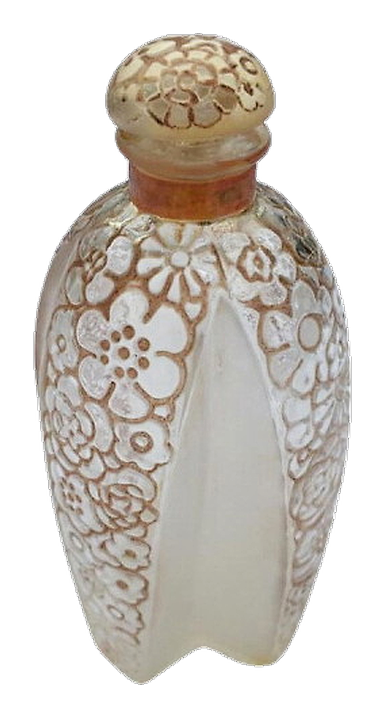
Gabilla’s visual identity mirrors its fragrance philosophy: understated elegance without overt ornamentation. The original boutique displayed bottles of clear crystal, their simple round shoulders catching light in a way that suggested clarity rather than extravagance. Labels featured a thin, serif typeface embossed in gold foil, centered on a cream‑coloured background. The monogram—a stylised "G" intertwined with an ampersand—appeared on the stopper, the wax seal, and occasionally on the perfumer’s stationery. Bottle design evolved subtly over the decades. Early 1910s releases used a squat, squat‑necked silhouette reminiscent of apothecary vials, while the 1920s introduced a taller, more slender form with a gently flared lip, reflecting Art Deco influences. La Vierge Folle’s bottle, for instance, bore a faint geometric pattern etched into the glass, a nod to the era’s architectural trends. By the 1930s, the house adopted a minimalist cylindrical shape, allowing the perfume’s colour—often a soft amber or pale rose—to become the focal point. Packaging materials emphasized tactile quality. Boxes were crafted from heavyweight linen‑covered cardboard, closed with a magnetic clasp stamped with the Gabilla emblem. Inside, a silk‑lined compartment held a single bottle, reinforcing the notion of a personal treasure. The brand’s advertising, when it appeared in niche journals, relied on monochrome photography that captured the bottle against a plain backdrop, letting the scent’s story unfold in the reader’s imagination rather than through flashy graphics. This restrained aesthetic continues to influence contemporary reissues of Gabilla’s classic scents.
Philosophy
Gabilla’s creative outlook rests on a simple premise: scent should echo a lived moment without demanding attention. Henriette Gabilla believed that a perfume’s power lies in its ability to recall a memory, a place, or a feeling, rather than to dominate the wearer’s aura. This belief shaped the house’s approach to composition, where each ingredient earned its place through a careful dialogue with the others. The brand favoured natural extracts—lavender fields of Provence, Syrian rose petals, Alpine violets—paired with modest amounts of synthetics introduced after the 1920s to stabilize volatile notes. The house also embraced a modest distribution ethic. Rather than chasing mass markets, Gabilla limited each launch to a few hundred bottles, allowing the perfumer to refine the formula based on direct feedback from a trusted circle of patrons. This practice cultivated a sense of intimacy; customers often received handwritten notes describing the inspiration behind a new scent. Over time, the philosophy evolved to include a respect for sustainability, with later owners sourcing ingredients from certified farms and reducing waste by re‑using glass containers. In every era, Gabilla’s guiding value remained the same: to create fragrances that feel like a quiet conversation between the perfume and the wearer.
Key Milestones
1890
Henriette Gabilla begins experimenting with essential oils and perfume formulation
1910
Gabilla perfume house opens at 6 rue Edouard VII, Paris
1912
Launch of Violette and Le Bouquet de Gabilla, early floral signatures
1922
Lilas introduced, capturing spring bud aromas
1924
Fleur de Jour released, reflecting daytime freshness
1926
Glycine and Pois de Senteur debut, showcasing botanical single‑note focus
At a Glance
Brand profile snapshot
Origin
France
Founded
1910
Heritage
116
Years active
Collection
1
Fragrances released
Avg Rating
4.0
Community sentiment
Release Rhythm


