The Story
Why it exists.
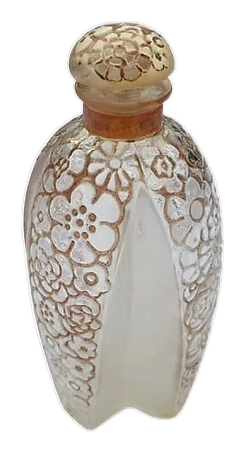
Henriette Gabilla unveiled Toutes Les Fleurs in 1925, aiming to bottle the very idea of “all the flowers” that filled Parisian gardens each spring. Drawing on the house’s tradition of hand‑crafted bouquets, she layered the freshest citrus with green foliage and a daring animalic whisper, creating a scent that felt both modern and timeless. The name itself paid homage to the era’s love of grand, inclusive titles, echoing the brand’s catalogue of year‑marked classics.
If this were a song
Community picks
La Vie En Rose
Édith Piaf
The Beginning
Henriette Gabilla unveiled Toutes Les Fleurs in 1925, aiming to bottle the very idea of “all the flowers” that filled Parisian gardens each spring. Drawing on the house’s tradition of hand‑crafted bouquets, she layered the freshest citrus with green foliage and a daring animalic whisper, creating a scent that felt both modern and timeless. The name itself paid homage to the era’s love of grand, inclusive titles, echoing the brand’s catalogue of year‑marked classics.
While many contemporaries leaned on single‑note roses, Gabilla chose to juxtapose a subtle animalic base with sweet and spicy accents, a nod to the house’s belief that perfume should echo lived moments without demanding attention. The citrus top lifted the composition, the green heart added depth, and the animalic finish lingered like a quiet memory, embodying her philosophy of balanced dialogue among ingredients.
The Evolution
At first spray, the perfume greets the skin with a bright burst of citrus, sharp bergamot‑like zest that instantly awakens the senses, while a hint of green leaf whispers through. Within minutes, the heart unfolds: a lush bouquet of sweet floral whispers intertwined with a spicy undercurrent, hinting at the animalic core without overwhelming. As the drydown settles after the first hour, the animalic pulse becomes the star, a warm, slightly musky warmth that clings to the skin for six to eight hours, leaving a faint sweet‑spice echo that fades only as the evening wanes.
Cultural Impact
When Toutes Les Fleurs debuted in 1925, it arrived at a moment when Parisian perfume houses were experimenting with the interplay of natural extracts and emerging synthetic ingredients. This blend of tradition and innovation resonated with a society eager for modernity yet comforted by familiar floral motifs. The scent quickly became a staple in the salons of the era, symbolising the optimism of the post‑war generation while also reflecting the nuanced shift toward more complex, layered compositions.
The House
France · Est. 1910
Gabilla is a Parisian perfume house founded in 1910 by Madame Henriette Gabilla, a Syrian‑born pioneer who began blending scents in the late 1880s. Over five decades the atelier released more than eighty fragrances, many of which bear the year of their launch in their title. The brand’s catalogue reads like a chronicle of early‑20th‑century French perfume, with classics such as Violette (1912), Lilas (1922) and La Vierge Folle (1929) still cited by collectors. Gabilla’s legacy rests on a quiet confidence: a modest boutique on rue Edouard VII, a steady output of refined compositions, and a reputation built on craftsmanship rather than flash.
If this were a song
Community picks
A delicate French garden at twilight, with soft piano chords and a hint of vintage romance, mirrors the fragrance’s blend of bright citrus, green freshness, and warm animalic depth.
La Vie En Rose
Édith Piaf












