The Story
Why it exists.
The beginning
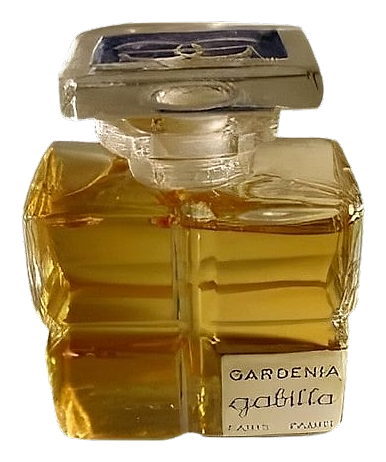
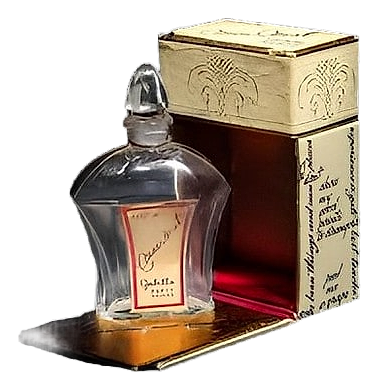
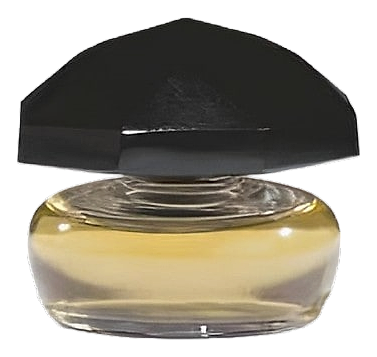
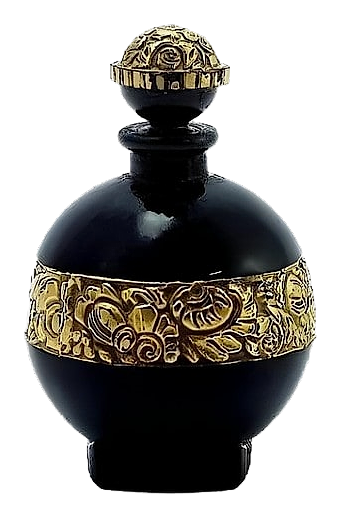
Amour Américan arrived in 1920 from the Gabilla atelier, a house associated with the name of a perfumer listed as Henriette Gabilla. Available records are sparse on the house itself, but the fragrance is catalogued among its output and dated to 1920, a year that places it firmly within the documented range of the house's production. The name suggests a fascination across the Atlantic, a Parisian reading of something American, filtered through a French sensibility. Amour Américan joined a catalogue whose fuller scope remains uncertain in the public record, yet the surviving entries place it among the earliest documented works bearing the Gabilla name.
The composition belongs to the early period of the house's documented output, a time when the stylistic preferences of its era were still being established in the wider perfumery world. Without detailed notes to draw from, what can be said is that Amour Américan fits the profile of an early twentieth-century French floral composition, a category that dominated the catalogues of small Parisian houses during this stretch. The fragrance reads as a soft, intimate floral, the kind of composition that earns its place through nuance rather than volume.
The evolution
What can be pieced together about the way Amour Américan wears comes from the impressions of those who have encountered surviving bottles and vintage formulations. The opening registers as bright and lifted, with a clarity that suggests a careful, measured hand at work rather than a heavy pour of material. Within the first stretch of wear, that initial brightness folds into something softer, a powdery haze that recalls the gentler side of early twentieth-century French florals. The heart holds through the long middle stretch, maintaining a creamy warmth that never pushes forward or demands attention. By the third hour, the composition settles into its drydown, a quiet, skin-close blend that stays present without ever becoming assertive.
Cultural impact
Amour Américan belongs to a specific Parisian moment, 1920, a year that places it within the documented output of a small French perfume house working in the early twentieth century. The fragrance entered a market shaped by the conventions of the era, conventions that have been well studied by later writers on the period. Gabilla's output during this period sits alongside that of other houses working in Paris at the time, each pursuing its own interpretation of what a French floral should feel like when worn.
The House
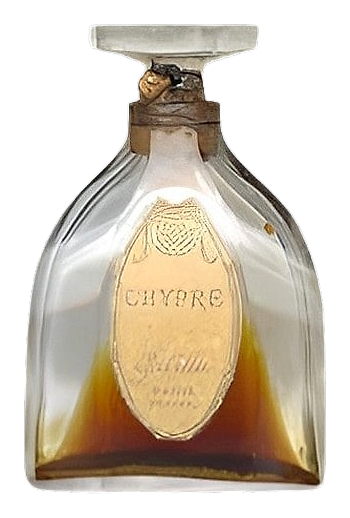
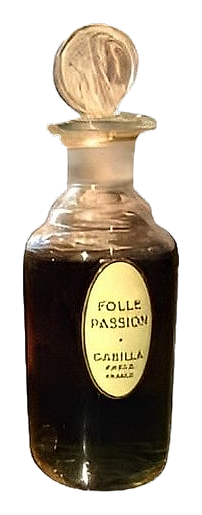
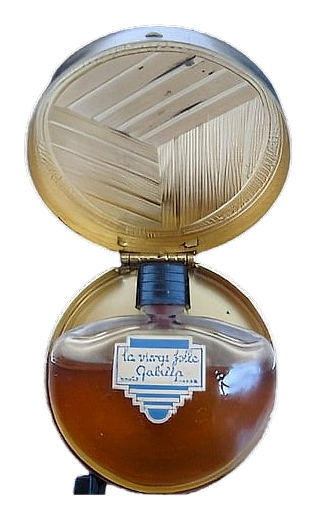
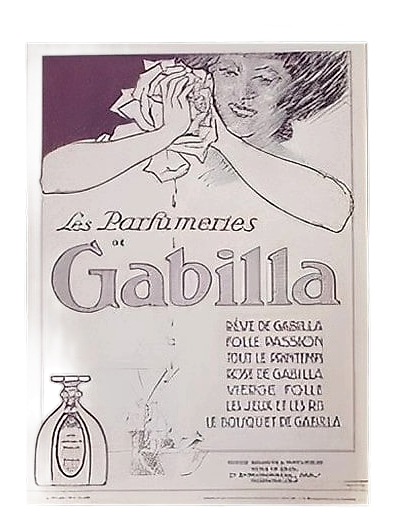
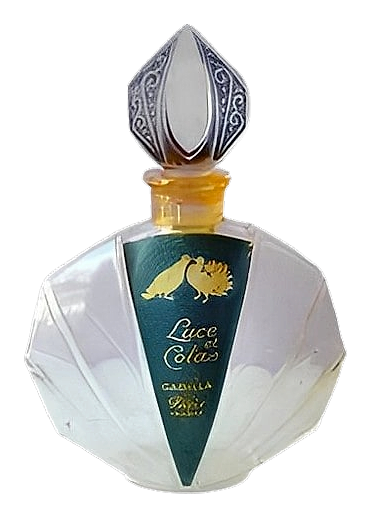
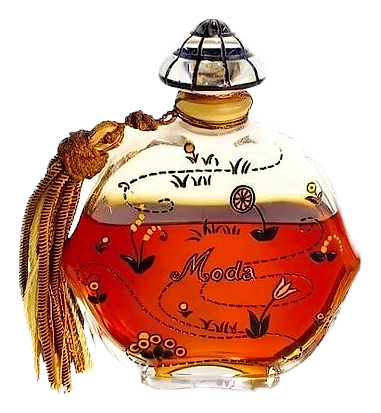
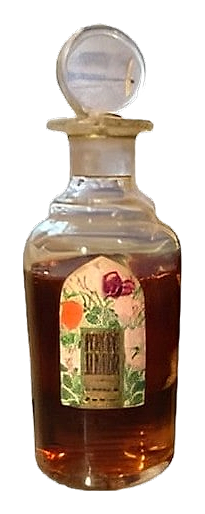
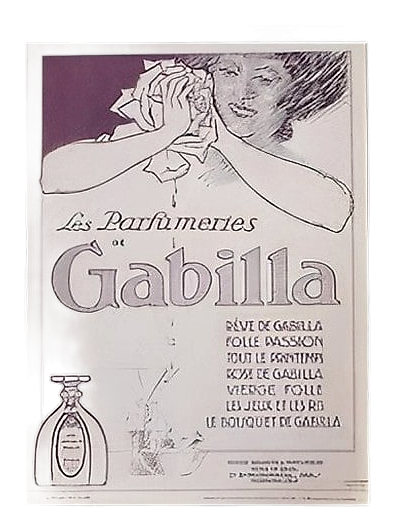
GabillaGabilla is a Parisian perfume house founded in 1910 by Madame Henriette Gabilla, a Syrian‑born pioneer who began blending scents in the late 1880s. Over five decades the atelier released more than eighty fragrances, many of which bear the year of their launch in their title. The brand’s catalogue reads like a chronicle of early‑20th‑century French perfume, with classics such as Violette (1912), Lilas (1922) and La Vierge Folle (1929) still cited by collectors. Gabilla’s legacy rests on a quiet confidence: a modest boutique on rue Edouard VII, a steady output of refined compositions, and a reputation built on craftsmanship rather than flash.
The Creator
Henriette GabillaGabilla favored layered constructions that unfolded over time. She began with a clear, luminous top, often built from citrus or green notes, then introduced a heart of rose, jasmine, or oud that lingered like a whispered secret.