The Story
Why it exists.
The beginning
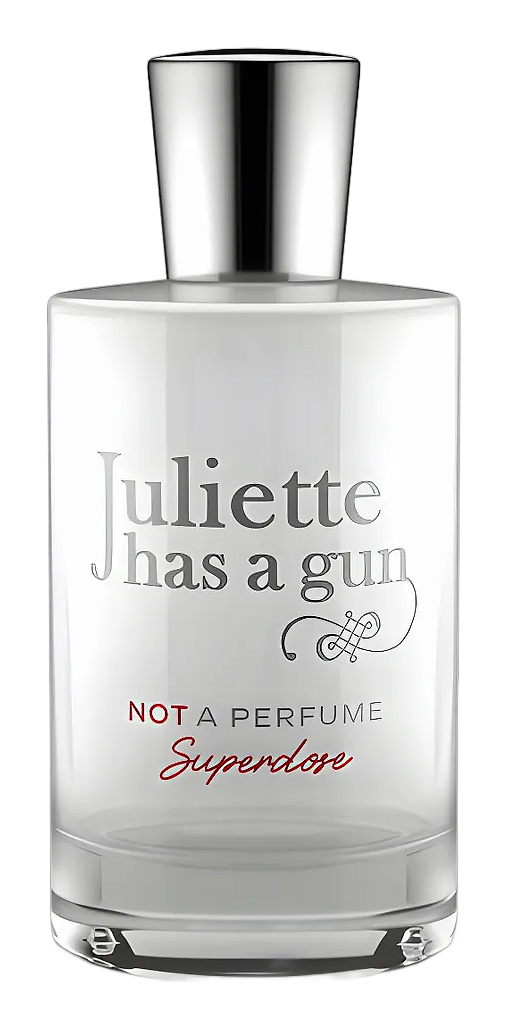
Romano Ricci trained under Francis Kurkdjian before founding Juliette Has a Gun in 2005, positioning himself in the shadow of his great-grandmother Nina Ricci's fashion legacy but with clear intent to subvert it. The house weaponizes wit against fine fragrance's stuffiness, dressing rebellion in refillable silver bullets. Not A Perfume emerged from a single provocation Ricci kept returning to: what if the fragrance wasn't the point?
Cetalox, the sole protagonist of Not A Perfume, represents a radical commitment to restraint. Unlike traditional fragrances that layer multiple notes to create complexity through combination, this composition places all weight on one molecule's behavior on skin. The result depends entirely on the wearer's body chemistry. Cetalox interacts with skin oils to produce warmth that reads differently on each person, making the fragrance simultaneously universal and deeply personal. The lack of opening or drydown notes is not an oversight but a statement: the fragrance refuses to perform stages for your benefit.
The evolution
Not A Perfume opens without ceremony. Cetalox, a synthetic ambergris molecule, arrives immediately, bypassing traditional top notes entirely. There is no citrus to greet, no bergamot to refresh. The molecule establishes itself as a warm, skin-adjacent presence from the first breath, present but not pronounced. As time passes, Cetalox remains the story. It neither deepens into darkness nor lifts into brightness. The lack of drydown notes reflects the fragrance's philosophy: there is no conclusion to reach, only a sustained presence to inhabit. The arc is not linear but circular, returning always to its single amber note.
Cultural impact
Not A Perfume arrived with a premise that split the room: it wasn't a fragrance in the traditional sense, but rather an olfactory concept that questioned what wearing scent should feel like. The no-allergen positioning was also unusual, most fragrances use allergens as anchors for longevity and projection. By removing them entirely, the house made a fragrance that worked differently: Intimate rather than announcing, personal rather than projecting. It developed a cult following among wearers who found traditional perfume too much, and among molecular fragrance enthusiasts who appreciated the reductionist approach. The concept influenced a wave of minimalist fragrances that followed, even as Not A Perfume remained the most radical statement in that category.