The Story
Why it exists.
The beginning
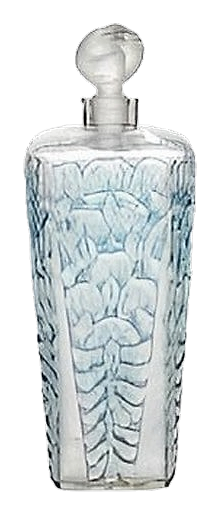
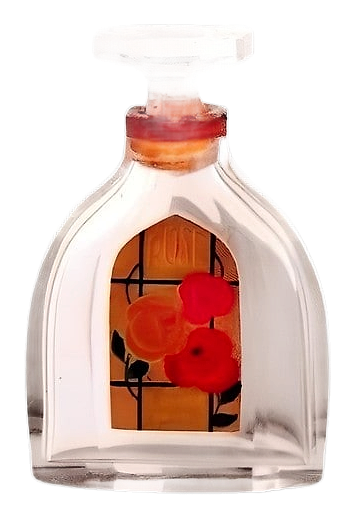
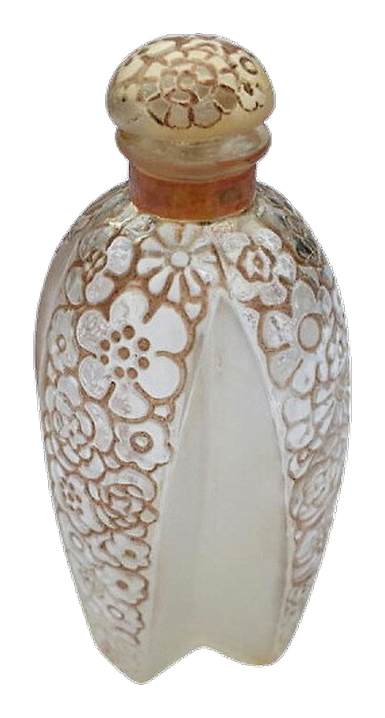
Chin-Li arrived in 1924 from the workshop of Henriette Gabilla, a Parisian perfumer whose house had built its reputation through quietly composed releases over the years. By the mid-1920s her atelier was producing a substantial catalogue, each announced with care and each bearing the modesty of a house that never needed to declare itself. Chin-Li was one of those releases, and its title pointed toward a subject the Western perfumery of the day had been visiting with some regularity: chinoiserie, that long fascination with lacquered screens, dragon robes, and the idea of an unreachable East. Gabilla entered that conversation with a deep red glass bottle designed by Maurice Depinoix, its stopper a small act of sculpture, its box trimmed in black, red, and gold.
What makes Chin-Li worth knowing about is the composition Gabilla chose to write. She did not write a straightforward oriental. The scent opens with a sweetness tempered by something deliberately musty, almost moldy in the way very old wooden chests smell, and a leather note that doesn't announce itself so much as lean against the wearer. That contrast, between sweetness and damp wood, between warmth and something cooler and older, is what defines the first minutes on skin.
The evolution
On skin, Chin-Li opens with a sweetness that reads as something candied, almost sugared, before the musty underpinning surfaces and takes its place underneath. That damp-woody quality, the one reviewers describe as almost moldy, rises into the middle phase without ever fully resolving into any single material. It is texture more than note, an atmosphere that surrounds whatever else is happening rather than identifying itself. The leather begins to take shape somewhere in the early going. It doesn't announce itself so much as lean into the composition, and it holds that position for the heart of the wear. Sweetness keeps threading through, but no longer as a leader; it has become a supporting voice, one of several. The mustiness persists as atmosphere rather than feature. Nothing shouts. Nothing recedes entirely either.
Cultural impact
Chin-Li's deep red Depinoix bottle signals the seriousness with which Gabilla wanted its work to be read, and the tricolor box carries a visual weight that matches the ambition of the juice inside. The composition itself, with its musty dampness, its sweetness, and its leaning leather, has kept it circulating in collector and archival circles for the better part of a century. It is a scent that rewards patience, and the bottle rewards looking at.
The House
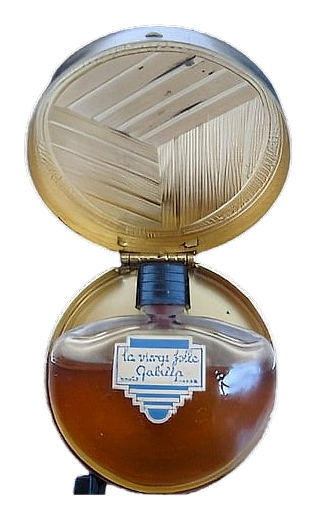
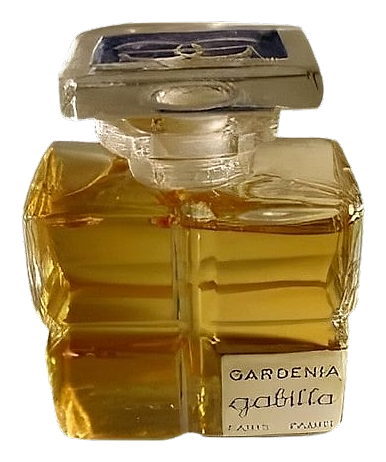
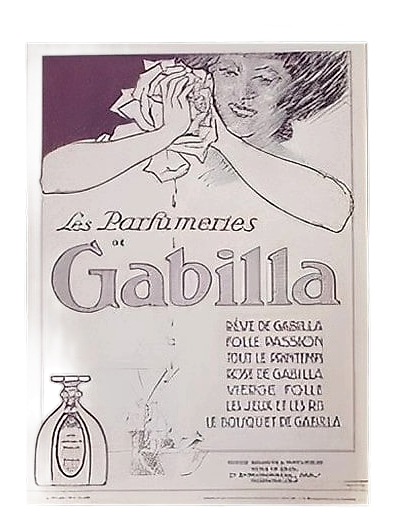
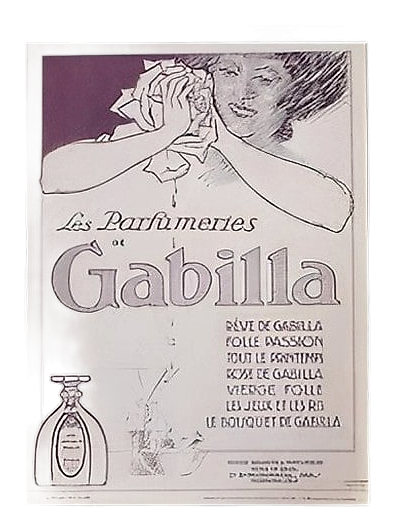
GabillaGabilla is a Parisian perfume house founded in 1910 by Madame Henriette Gabilla, a Syrian‑born pioneer who began blending scents in the late 1880s. Over five decades the atelier released more than eighty fragrances, many of which bear the year of their launch in their title. The brand’s catalogue reads like a chronicle of early‑20th‑century French perfume, with classics such as Violette (1912), Lilas (1922) and La Vierge Folle (1929) still cited by collectors. Gabilla’s legacy rests on a quiet confidence: a modest boutique on rue Edouard VII, a steady output of refined compositions, and a reputation built on craftsmanship rather than flash.
The Creator
Henriette GabillaGabilla favored layered constructions that unfolded over time. She began with a clear, luminous top, often built from citrus or green notes, then introduced a heart of rose, jasmine, or oud that lingered like a whispered secret.