The Story
Why it exists.
The beginning
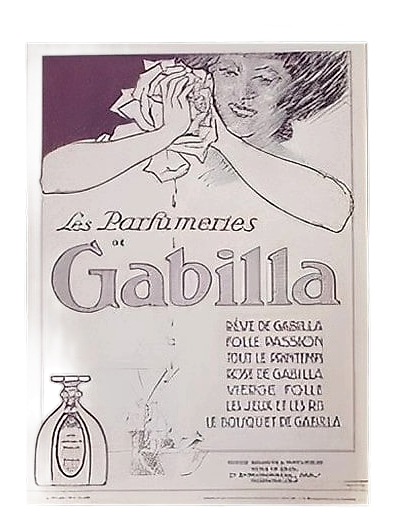
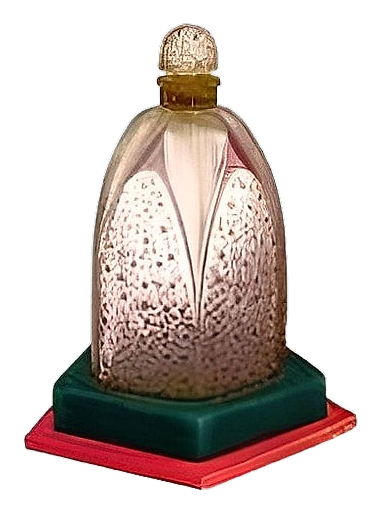
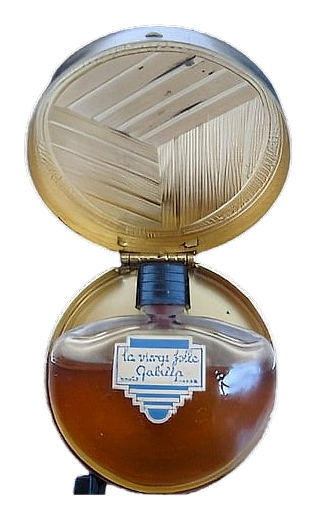
Henriette Gabilla released La Vierge Folle in 1929. The perfume, whose name translates roughly as "The Mad Virgin," reads against the grain of its moment. It is composed with intention, pulling spiced florals into chypre territory, and asks the wearer to carry something more layered than a pretty gesture. The composition has a quiet command to it, the kind that does not announce itself across a room but settles into the air with a certain gravitational pull. The spiced florals are not arranged as decoration. They do structural work, leaning against darker materials underneath, and the whole thing holds together with a discipline that feels deliberate rather than accidental.
What makes La Vierge Folle worth your attention is the accord architecture. The spicy-floral oriental framework was common enough in 1929. What sets this one apart is the grounding. Chypre and animal notes do the structural work underneath the brighter materials. That combination, spicy brightness over a mossy, animalic foundation, is a deliberate structural choice.
The evolution
The opening lands on bright Bergamot and Mandarin, lifted by Lavender, sharp enough to cut through cold air. There is no pretense about what it is doing. The citrus arrives with a clarity that feels almost architectural, each note distinct in the first moments before they begin to merge, the mandarin's sweeter edge rounding the bergamot's sharper facets while the lavender adds a clean, herbal thread that keeps the whole thing from collapsing into simple fruit. Spice begins to enter within minutes, warming the composition toward something denser, and the shift happens gradually enough that you register the change without quite being able to point to the exact moment it occurred. The heart that follows carries the perfume into richer territory.
Cultural impact
La Vierge Folle occupies a curious position in early twentieth century French perfumery. It belongs to a category of fragrances, the spicy-floral chypre, that was being developed and refined during the late 1920s, and it represents one of the more confident executions of that structural approach from the period. The perfume still appears in vintage listings and remains a point of reference for those interested in the chypre-spicy architecture that defined a certain strain of French composition before the category shifted toward softer, more commercial profiles.
The House
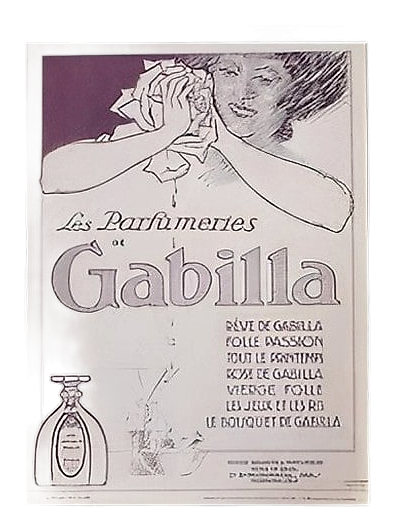
GabillaGabilla is a Parisian perfume house founded in 1910 by Madame Henriette Gabilla, a Syrian‑born pioneer who began blending scents in the late 1880s. Over five decades the atelier released more than eighty fragrances, many of which bear the year of their launch in their title. The brand’s catalogue reads like a chronicle of early‑20th‑century French perfume, with classics such as Violette (1912), Lilas (1922) and La Vierge Folle (1929) still cited by collectors. Gabilla’s legacy rests on a quiet confidence: a modest boutique on rue Edouard VII, a steady output of refined compositions, and a reputation built on craftsmanship rather than flash.
The Creator
Henriette GabillaGabilla favored layered constructions that unfolded over time. She began with a clear, luminous top, often built from citrus or green notes, then introduced a heart of rose, jasmine, or oud that lingered like a whispered secret.