
The Story
Why it exists.
The beginning
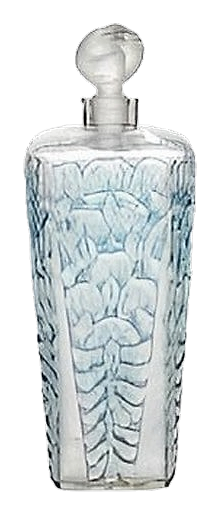
Henriette Gabilla released Glycine in 1926. The perfume carries its name from a flower, which matches the thread that runs through much of her work as a perfumer, the willingness to let a single botanical guide the entire composition. Glycine follows that logic. The wisteria vine grows in clusters, heavy with pale petals that drop in long cascades. Gabilla didn't reach for the obvious bloom in the garden. She reached for something most perfumers had ignored, and that choice defines the fragrance from its first breath. What makes Glycine worth slowing down for is the precision in the construction. The green notes at the top read like stems still holding moisture. The heart opens into something cool and lifted, almost like the smell of petals after rain.
Wisteria is a difficult flower to capture because the actual blossoms carry very little extractable oil, which means the note has to be built rather than distilled in any straightforward sense. Gabilla's approach leaned into the vine rather than the bloom. The green opening reads like living stem rather than pressed petal. There's a cool lift at the top, something that catches the air the way new leaves catch light in early morning. The heart stays floral but tempered, never sugary, never heady.
The evolution
The first few minutes are green in a way that registers immediately. Fresh, sharp, alive, with the unmistakable brightness that sources describe as a lemon tree in bloom. That citrus quality comes through clearly from the opening moments, cutting through the green with something almost sunny. As the minutes pass, the composition settles into its floral middle. The notes blend rather than compete, each one finding its place against the others. The green softens, the citrus rounds out, and the floral character comes forward without ever becoming heavy. There's a restraint to how the heart develops, a refusal to layer sweetness on sweetness. The final stretch of the wear is where Glycine earns its reputation for clarity. The heavier elements stay light. The florals don't turn powdery or syrupy. The green doesn't fade into something dull.
Cultural impact
Glycine sits in an unusual position among fragrances that have aged nearly a hundred years. The way it handles green florals still feels current, still relevant to how perfumery has continued to evolve in the decades since its release. It anticipated directions that many modern compositions would only later explore. The composition works because it never tries too hard. Where many florals of its era leaned into heavier constructions, dense with sweetness or warmth, Glycine keeps its structure light.
The House
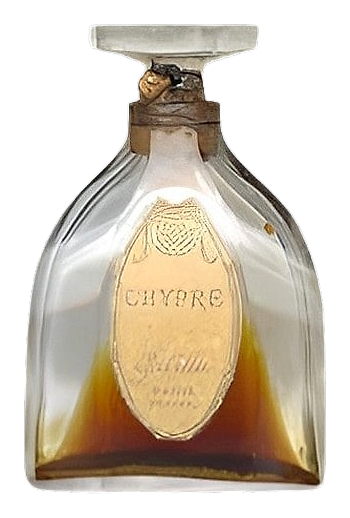
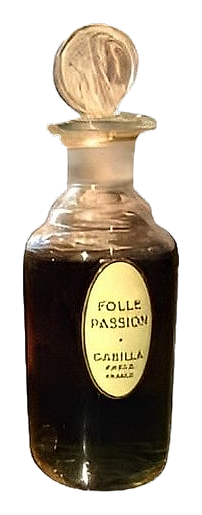
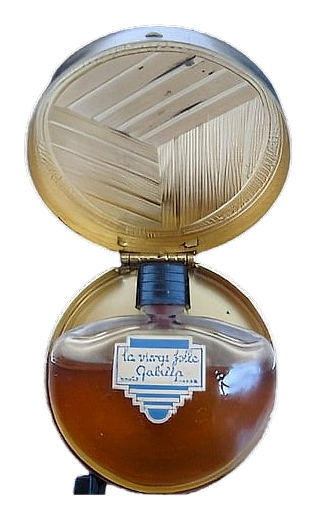
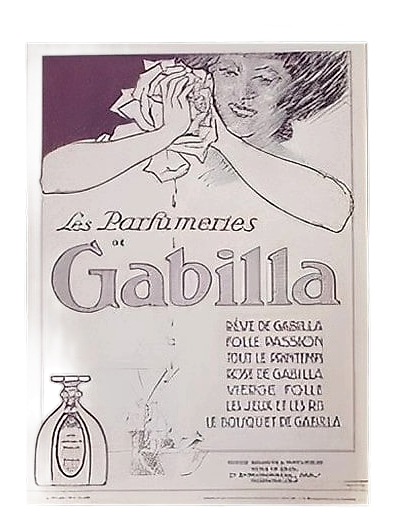
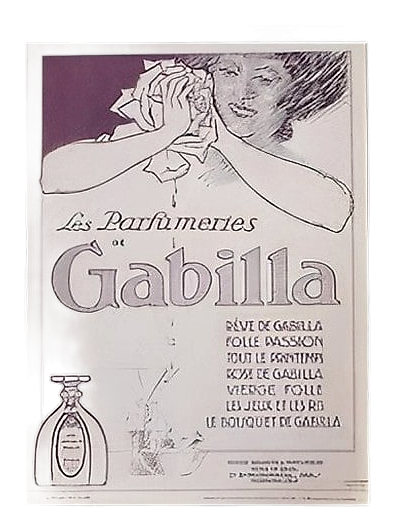
GabillaGabilla is a Parisian perfume house founded in 1910 by Madame Henriette Gabilla, a Syrian‑born pioneer who began blending scents in the late 1880s. Over five decades the atelier released more than eighty fragrances, many of which bear the year of their launch in their title. The brand’s catalogue reads like a chronicle of early‑20th‑century French perfume, with classics such as Violette (1912), Lilas (1922) and La Vierge Folle (1929) still cited by collectors. Gabilla’s legacy rests on a quiet confidence: a modest boutique on rue Edouard VII, a steady output of refined compositions, and a reputation built on craftsmanship rather than flash.
The Creator
Henriette GabillaGabilla favored layered constructions that unfolded over time. She began with a clear, luminous top, often built from citrus or green notes, then introduced a heart of rose, jasmine, or oud that lingered like a whispered secret.