The Story
Why it exists.
The beginning
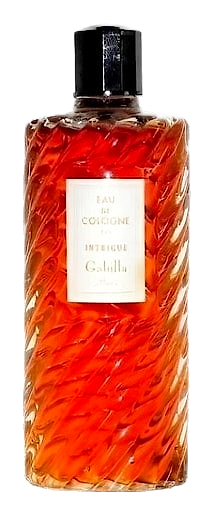
Intrigue arrived in 1938 from the atelier of Henriette Gabilla, a perfumer whose house operated in Paris. By the late 1930s, Gabilla had released a body of work that included compositions such as the early Violette and the later La Vierge Folle, both recorded as part of the catalogue that preceded this release. Intrigue entered that catalogue quietly, joining a roster that built its reputation gradually rather than through any single announcement. The name does what the name suggests. This is a fragrance designed for the sideways look, the question that goes unasked, the conversation that starts without either party quite noticing. It reads as a composition meant to recall a feeling rather than announce itself, the kind of scent that prefers to be discovered rather than introduced.
What makes Intrigue worth attention is the interplay between its green top and its warmer base. The airy green florals that open the fragrance carry an almost translucent weight, light enough to feel effortless on the skin. Then the amber and musk underneath build quietly, lending the composition a backbone that lasts without ever tipping into heaviness. The transition between those two layers defines the wear. The greens read almost like stems and leaves before anything more recognizably floral appears, and the warmth arrives in stages rather than all at once.
The evolution
The opening arrives cool and green, the florals reading almost like stems and leaves before the petals register. Light, almost weightless, the kind of scent that makes you lean closer to your own wrist to catch what it is offering. Within the first half hour, the amber begins to surface. The green does not vanish so much as recede into the background, and the composition warms in stages. The musk underneath steadies everything, lending a skin-close softness that stays present without pressing or competing with the other notes. Each layer hands off cleanly to the next, and nothing feels rushed. As the hours pass, the drydown settles into a warm, slightly powdery amber-floral blend that clings gently to fabric. On a scarf you might find a quiet trace of it the next morning, soft rather than assertive. Not loud. Not gone.
Cultural impact
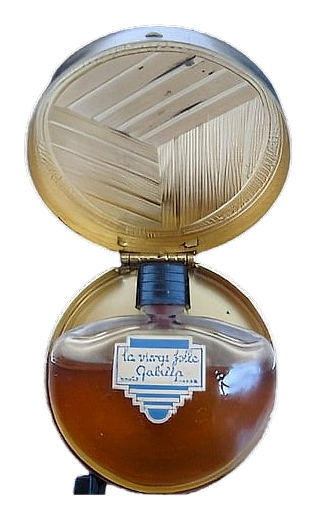
Intrigue sits comfortably in the floral register that defined much of Gabilla's catalogue across the decades of its operation. It shares a sensibility with the house's earlier Violette and the later La Vierge Folle, both recorded as part of the same body of work that included this 1938 release. Florals handled with a light hand, warmth placed underneath rather than broadcast. The kind of composition that asks for a second encounter before revealing its full shape.
The House
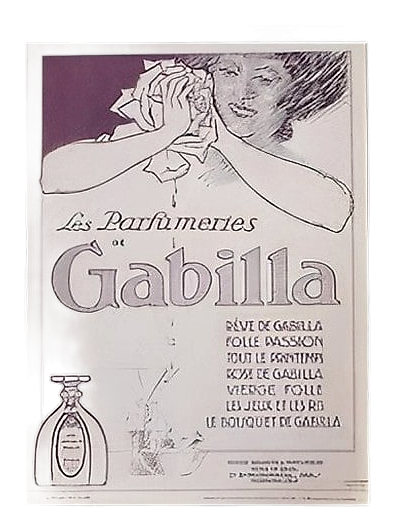
GabillaGabilla is a Parisian perfume house founded in 1910 by Madame Henriette Gabilla, a Syrian‑born pioneer who began blending scents in the late 1880s. Over five decades the atelier released more than eighty fragrances, many of which bear the year of their launch in their title. The brand’s catalogue reads like a chronicle of early‑20th‑century French perfume, with classics such as Violette (1912), Lilas (1922) and La Vierge Folle (1929) still cited by collectors. Gabilla’s legacy rests on a quiet confidence: a modest boutique on rue Edouard VII, a steady output of refined compositions, and a reputation built on craftsmanship rather than flash.
The Creator
Henriette GabillaGabilla favored layered constructions that unfolded over time. She began with a clear, luminous top, often built from citrus or green notes, then introduced a heart of rose, jasmine, or oud that lingered like a whispered secret.