The Story
Why it exists.
The beginning
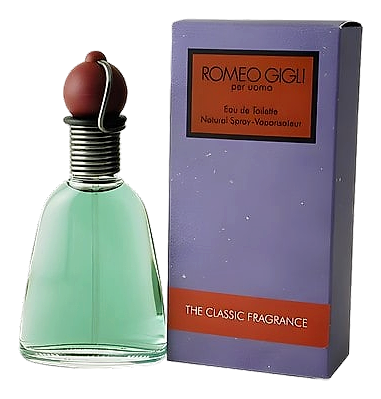
Romeo Gigli per Uomo arrived in 1991, the second act of an Italian fashion house that had already proven itself on the runway. The label extended into scent the way most designers eventually do, and Alberto Morillas composed the formula. The juice reads as an Oriental Spicy, a category built on warmth and aromatic complexity, but Morillas approached it through an herbal, anise-tinged lens that gives the composition its distinct character. The opening carries a green, almost cold herbal edge, with tarragon and lavender pushing forward alongside a dark plum undertone that keeps the brightness from becoming thin. A clean citrus stack of bergamot, mandarin, grapefruit, and lemon tree frames the top, while Brazilian rosewood adds a woody facet that bridges the green and what comes next.
What makes this composition worth a second look is the structure beneath the spice. The top is unusually crowded with green and herbal material: tarragon, lavender, aldehydes, and Brazilian rosewood, layered over a sharp citrus stack of bergamot, mandarin, grapefruit, and lemon tree. That aromatic-green opening gives the fragrance a colder, more cerebral character before the warmer spices even arrive, and it sets up the contrast that drives the rest of the wear.
The evolution
The first twenty minutes are a green, almost cold opening. Tarragon and lavender push forward, sharp and herbal, with plum underneath adding a dark-fruited undertone before the sweetness surfaces. Brazilian rosewood and a stack of citrus notes keep it aromatic and clean at the edges, so it reads crisp rather than dense. Around the 30-minute mark the temperature shifts. Cinnamon, balsam fir, and honey take over the middle, with carnation, rose, and jasmine threading through as supporting floral material. The honey here carries a darker, almost resinous quality, and it works with the fir to give the heart a cool-spiced character that feels closer to a European café than a tropical sweet shop. The warmth arrives gradually. By hour three, vanilla and benzoin have settled in alongside tonka bean and amber, with styrax adding a smoky-leather accent that keeps the sweetness from going soft.
Cultural impact
Romeo Gigli per Uomo occupies a specific place in the landscape of early-1990s men's perfumery. As an Oriental Spicy composition with a distinctly herbal, anise-tinged opening, it charts a different course from many of the heavier amber-and-vanilla launches that defined the same era. The fragrance's green-aromatic top, built on tarragon, lavender, aldehydes, and Brazilian rosewood, gives it a cooler, more cerebral first impression before the warmer spices arrive. The bottle design by Jacques Helleu reflects the visual language of the period, with clean lines and a restrained elegance that suits the composition inside.