
The Story
Why it exists.
The beginning
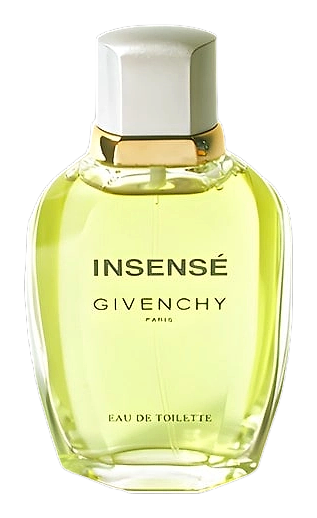
Daniel Molière designed Insense for Givenchy in 1993. The brief was simple: a men's fragrance that refuses to behave like one. The aldehydic lift was the mechanism, a cold, bright spark that reframes every note that follows. Molière built upward from that anchor, letting the citrus and lavender do the work of immediate freshness before the floral heart makes its argument. By the time the fir balsam arrives, the fragrance has already made its case: this is what happens when you take a masculine structure and fill it with unexpected material. The name, Insense, is a French word that means madness or insanity, but in perfumery it carries a secondary meaning: incense. Givenchy wanted both interpretations in play. The fragrance should feel slightly unhinged at first encounter, then settle into something almost reverent as it develops.
The aldehydic-lavender combination is the structural oddity here. Aldehydes typically appear in women's fragrances, Chanel No. 5, Arpège, as a soapy, waxy lift that makes florals feel elevated and cool. In Insense, they anchor a masculine composition, giving the citrus and lavender an almost metallic brightness that no amount of soapiness can soften. It is, structurally, a men's fragrance built on a women's fragrance accord. The magnolia and lily of the valley in the heart make this explicit. These are white florals, traditionally feminine in perfumery's grammar, and Molière put them directly in the path of a fresh, green, aldehydic opening without apology.
The evolution
The first ten minutes are cold. Aldehydes and citrus hit the skin like ice water, the lemon and mandarin bright and almost sharp, the basil giving it a green edge that keeps everything grounded. The lavender arrives around the five-minute mark, soapy and aromatic, and for a moment the fragrance threatens to become conventional. Then the aldehydes do their work, that waxy, slightly metallic lift that changes the temperature of everything around it. By the thirty-minute mark, the heart begins to show. Lily of the valley and magnolia rise through the citrus and lavender, their white floral character reading as powdery, cool, and unexpectedly delicate. The iris adds a faint root-like dryness that keeps the florals from becoming sweet. This is the phase that divides wearers, a masculine fragrance revealing a soft interior. The drydown starts around the second hour. The citrus and florals begin to recede, and the fir balsam takes over. Clean, green, slightly resinous, it reads as forest air more than perfume.
Cultural impact
Insense has accumulated a small but devoted following since its 1993 launch, with strong community ratings for scent quality and longevity. Wearers consistently describe it as creative and unconventional, a masculine composition that doesn't behave as expected. The aldehydic-lavender opening polarizes, but those who appreciate it tend to appreciate it deeply. It occupies a unique space: a fresh, aromatic men's fragrance with an explicitly floral heart, discontinued but still sought after by collectors and enthusiasts who value its rarity and unconventional structure.