The Story
Why it exists.
The beginning
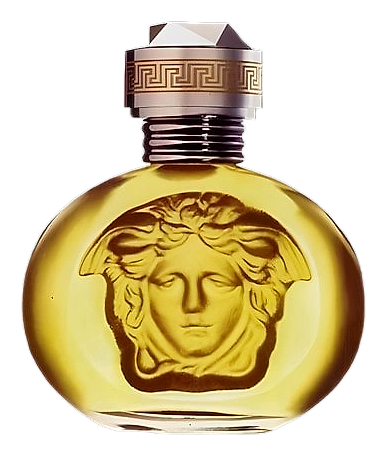
In 1995, Gianni Versace wanted to bottle his sister. Not literally, but Donatella Versace had a presence that demanded translation into something wearable. She was blonde, she was bold, and she was his mirror. He commissioned perfumer Nathalie Feisthauer to create a fragrance that captured the energy of a woman who walks into a room and doesn't wait for it to notice her. Blonde was the result, a white floral with an animalic pulse, designed for a woman who can do anything on her own terms.
What makes Blonde interesting is its structure. Most white florals lean pretty, gardenias and tuberose treated like a bouquet. Blonde refuses. The addition of civet, an animalic note derived from the Ethiopian civet cat, gives the composition a rawness that prevents it from ever smelling merely decorative. The pitosporum in the opening is unusual, adding a creamy floral quality that bridges the initial sweetness and the deeper warmth beneath. It's a fragrance that understands the difference between smelling expensive and smelling loud.
The evolution
The opening hits fast, bergamot and neroli give it brightness, but gardenia and pitosporum immediately add that creamy, almost sunscreen-like white floral warmth. Violet brings the powder. Within minutes, the tuberose takes over. Not politely. This is the phase where Blonde announces itself, big, buttery, indolic tuberose that smells like the memory of a summer garden at dusk. The ylang-ylang and carnation add spice, a peppery edge that keeps the florals from getting too soft. Then the civet arrives. The drydown is where Blonde earns its reputation, benzoin and musk wrapping around that animalic base, the kind of warmth that feels like skin, like presence, like someone sitting next to you. On most skin types, this lasts 8-10 hours. The sillage is strong from the start and stays close in the drydown, intimate but persistent.
Cultural impact
Blonde occupies a specific corner of fragrance history, the early 1990s moment when bold, animalic florals were having a cultural moment. Created for Donatella Versace as a tribute to her persona, it became a reference point for anyone who wanted tuberose with an edge. Comparisons to Robert Piguet's Fracas are frequent, both are animalic white florals that refuse to be polite. The fragrance has a cult following among those who remember it from its original release and newer fans who discovered it through the vintage market.