The Story
Why it exists.
The beginning
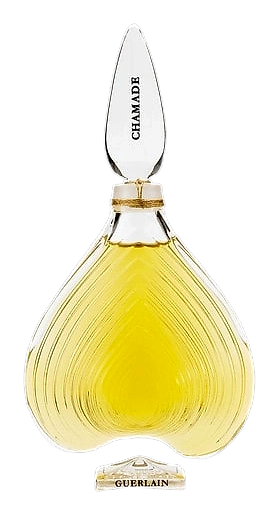
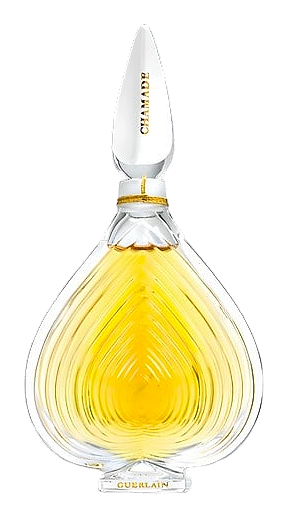
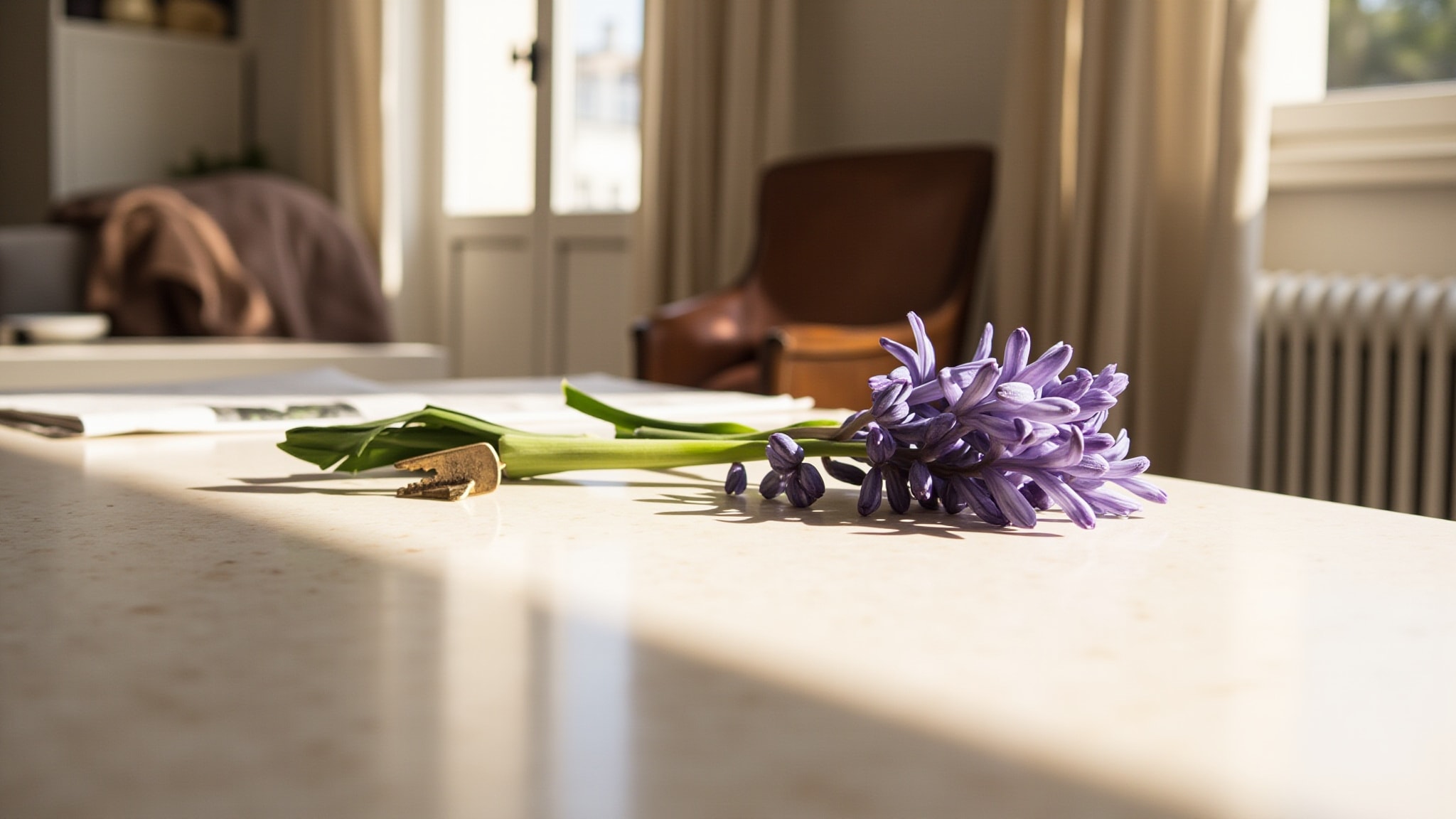
Chamade launched in 1969, a composition that arrived when perfumery itself was being rewritten, when green notes were being tested in new positions and aldehydes were taking on colder, more architectural shapes. The fragrance opens with sharp aldehydes and hyacinth, a first breath that feels lifted and almost metallic, then yields to a warmer heart of galbanum and white florals. There's a deliberate counterpoint between the cool, sparkling top and the softer, more tactile florals underneath. The composition resolves into tolu balsam, benzoin, and vanilla, materials that bring weight and warmth without tipping into sweetness. The aldehydes in the opening are doing real structural work, giving the florals a certain clarity rather than letting them blur.
What makes Chamade worth studying is the galbanum and the way it refuses to behave as expected. In many compositions, green notes serve as a brief top-note flash, a quick vegetal wink before the florals take over. Here, galbanum lives in the heart of the fragrance, and it cuts through lilac and lily of the valley with something almost raw, resinous, and distinctly unpretty. The aldehydic brightness above and the resinous warmth below exist in a real tug-of-war, and the galbanum is what keeps the two from collapsing into each other.
The evolution
The first fifteen minutes belong to aldehydes. They arrive sparkling, almost metallic, lifting hyacinth and bergamot into something that reads colder than it actually is. Rose and jasmine thread through but stay restrained, never pushing forward to dominate. Then the green arrives. Galbanum pushes forward, sharp and vegetal, joined by lilac and lily of the valley. The whole thing feels like stepping from a warm room into a garden at dusk, that brief shock of cool air against bare skin. The florals and the green notes circle each other for a long stretch, each tempering the other, neither fully winning. Eventually tolu balsam and benzoin soften everything, and vanilla rounds the edges. The shift toward base notes happens gradually, more like a slow exhalation than a cut. What emerges is warmth layered over the memory of green, the florals fading but not disappearing.
Cultural impact
Chamade occupies a particular place in the catalog, and it earns attention by refusing to behave like the more famous Guerlain landmarks. It's a green floral built on tension rather than comfort, composed with aldehydes, galbanum, and balsams arranged in a way that asks for attention. Worn today, it reads less as vintage and more as deliberate, a scent for someone who knows exactly what they're asking for. The composition has aged into something quietly canonical: still studied, still worn, still referenced when perfumers discuss the possibilities of aldehydic green florals.
The House
GuerlainGuerlain stands as one of the oldest and most revered perfume houses in the world, founded in Paris in 1828 by Pierre-François-Pascal Guerlain. What began as a boutique on rue de Rivoli quickly became the preferred destination for Parisian society, attracting dandies and elegant women who sought custom-crafted fragrances. The house's influence grew to such heights that Guerlain earned the title of Official Perfumer to Napoleon III after presenting Eau de Cologne Impériale to Empress Eugénie as a wedding gift in 1853. This royal patronage marked the beginning of Guerlain's enduring association with European aristocracy, as the house went on to create fragrances for Queen Victoria and Queen Isabella II of Spain. Today, under the creative direction of Thierry Wasser, the fifth-generation perfumer, Guerlain continues to shape the landscape of fine fragrance with a portfolio spanning over 1,100 olfactory creations. The house remains headquartered at its legendary Champs-Élysées mansion, a historic monument that anchors Guerlain's position at the intersection of heritage and contemporary luxury.
The Creator
Jean-Paul GuerlainJean-Paul Guerlain's style resists easy categorization, though richness and depth define nearly every composition. He favored opulent oriental structures, warm woods and resins, and florals treated with almost sculptural precision.