The Story
Why it exists.
The beginning
Jacques Guerlain created Voilette de Madame in 1901, naming it for the veil, that whisper of fabric that conceals as much as it reveals. The fragrance opens powdery and floral, proper in its presentation. But beneath the surface, ambergris and musk assert themselves, revealing an animal dimension that counters all the etiquette. This is a composition of contrasts: the delicate and the bold, the restrained and the insistent.
The note pyramid is deceptive. Iris and tonka bean suggest something soft, powdery, gentle, and they deliver, eventually. But the ambergris and clove in the heart refuse to stay polite. The Guerlain house has always understood that beauty and beast share the same skin. Voilette de Madame is an early proof of that philosophy.
The evolution
The opening is all ceremony. Violet powder, bergamot's brightness, the green bite of geranium and verbena, it announces itself like a guest arriving at the correct hour. Then the heart arrives: jasmine and orange blossom, ylang-ylang's tropical richness, sweet acacia. But the telling detail is what lives beneath. Ambergris. Musk. The floral suddenly breathes differently. As the hours pass, the powder resurfaces, iris and moss now, warmer, earthier, but it carries that secret with it. The softest animal remains.
Cultural impact
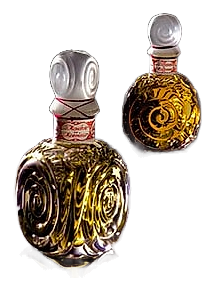
Since 2014, the historic Voilette de Madame flacon has been exhibited at Maison Guerlain, a recognition that this 1901 composition belongs to perfume history, not just perfume bottles. It's not a crowd-pleaser in the modern sense. It was never meant to be. Those who seek it out tend to be collectors, historians, or simply people who want to smell something that refuses to apologize for being old, being proper, and having a secret.