The Story
Why it exists.
The beginning
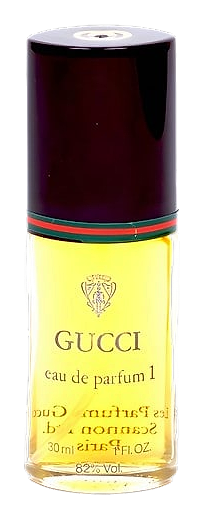
In 1974, Gucci made a move the fashion world hadn't quite expected. Number One was the statement. The composition is a floral chypre built in the classical French tradition, with aldehydes flashing like camera bulbs at the top, a heart stuffed with garden flowers, and an oakmoss base that anchors everything in the earth. The aldehydes give it that unmistakable opening lift, soapy, sparkling, and very much of its decade. Below them sits a dense floral heart, and below that, the mossy, earthy foundation that gives the whole structure its weight. The fragrance wears its ambition openly. It doesn't whisper. It enters and stays. The name was simple. Number One. As in, the first. As in, this is where it starts.
What's structurally interesting about Gucci No 1 is the sheer density of its floral heart. Ten materials occupy the middle register: carnation, rose, ylang-ylang, lilac, heliotrope, iris, jasmine, lily of the valley, neroli, orchid. That's not a bouquet. That's a garden in full revolt, held together by the spiced pepper of carnation and the powdery iris. The aldehydes above give it that soapy, sparkling lift, a 1970s signature, while the oakmoss-patchouli-sandalwood trinity below gives it the soil it needs to last. Each floral brings its own gravity.
The evolution
The first twenty minutes are loud. Aldehydes lift the whole thing into a fizzy, sparkling register, almost carbonated, with green notes and hyacinth adding a sharp, stems-and-water quality underneath. Bergamot and lemon keep it from feeling stuffy. Then the aldehydes recede, and the heart arrives in full force. This is where the ten florals start competing for attention, and they don't politely take turns. Carnation brings its clove-like warmth, ylang-ylang brings its dense sweetness, iris floats in powder somewhere above it all. The whole thing smells like a flower shop at midday, slightly overwhelming, completely alive. Three hours in, the base starts to take over. Oakmoss and patchouli do what they do best: they darken everything, pull it down into something earthier, more serious. Sandalwood smooths the edges. Musk softens the drydown further.
Cultural impact
Gucci No 1 arrived in 1974, and it stands as a landmark composition of its era. It's a big, classical, statement chypre, the kind of fragrance that defined a period when perfumers weren't afraid to build dense, layered florals over mossy, earthy bases. Today, it's a touchstone for anyone studying classical perfumery or appreciating the kind of ambitious, full-scale compositions that defined the 1970s. It wears like a period piece, and for the people who love it, that's exactly the appeal.