
The Story
Why it exists.
The beginning
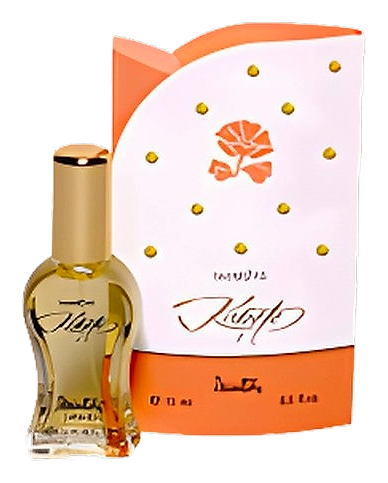
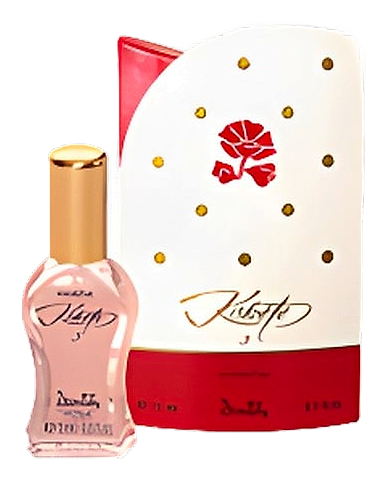
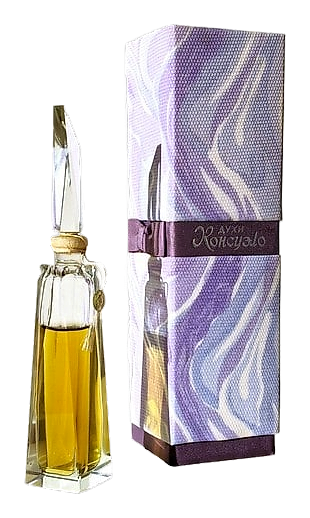
Konsuello arrived in 1966 from a Latvian perfumery, composed by Bronislava Schwarzman during a period of notable creative output for the house. The name takes its Cyrillic spelling from a traditional given name rooted in Latin, rendered in a way that bridges Romance-language origins with Baltic craft. This is a composition that speaks to the cross-cultural currents flowing through Riga in the mid-twentieth century, when regional perfumers drew on a wider European vocabulary while speaking to local tastes. Konsuello carries that layered identity in its very title, a floral composition marked by the bilingual sensibility that shaped so much Latvian artistic production of the era.
What makes the structure worth noticing is the sheer floral density in the upper half. Lily of the valley, violet, and lilac stacked on top, then rose, jasmine, carnation, and orchid forming the heart, before the composition drops into a relatively spare base of musk, cedar, and amber. The top notes bring a green-spicy lift that gives the opening its brightness, a crispness from the violet and the cool green of lily of the valley sharpened by the lilac's peppery edge. That green-spicy accord threads through the first half hour before the warmer florals start to take over.
The evolution
The first spray reads cool and green, lily of the valley and violet arriving almost simultaneously with the lilac, creating a mist that feels like early morning air. There's a sweetness but it's restrained, not fruity, more like the green stem of a flower than the petal itself. Within 15 minutes the carnation and rose push forward, warming the composition, and the orchid adds a creamy, slightly soapy texture that softens everything. The jasmine stays in the background here, not indolic, just supportive. By the two-hour mark the florals have compressed into a dense powdery mass, warm and intimate. The cedar arrives quietly, more as a suggestion of wood than actual lumber. The musk and amber do most of the base work, creating a skin-like warmth that settles close to the wearer.
Cultural impact
Konsuello occupies a particular niche for collectors of Soviet-era and Baltic perfumery, representing a classic floral composition from a house whose output shaped regional tastes. It's the kind of scent that carries memory as much as aroma, a discontinued bottle that pulls collectors for reasons beyond mere rarity. The fragrance itself is a study in mid-century floral structure, the kind of composition that prioritises warmth and softness in its drydown, building toward that amber-musk base that wears close to the skin. For vintage hunters, the discontinued status has only increased its draw, making intact bottles a find worth noting.
The House
DzintarsDzintars is a Latvian perfume house that has been creating fragrances for nearly a century. Founded in Riga in the early 1920s, the brand survived the upheavals of World War II, Soviet nationalisation and the re‑establishment of Latvia’s independence. Its catalogue includes more than two hundred scents, ranging from classic fougère blends to aromatic compositions that echo the Baltic landscape. Dzintars remains a familiar name in Eastern Europe, where many of its vintage releases are still recognised by collectors.
The Creator
Bronislava SchwarzmanHer signature technique involves layering aldehydic brightness over structured florals, creating an effect that feels both vintage and surprisingly modern. Schwarzman favored ingredients with clear, assertive characters: pine needles, lilac, violet, and lily-of-the-valley appe…