
The Story
Why it exists.
The beginning
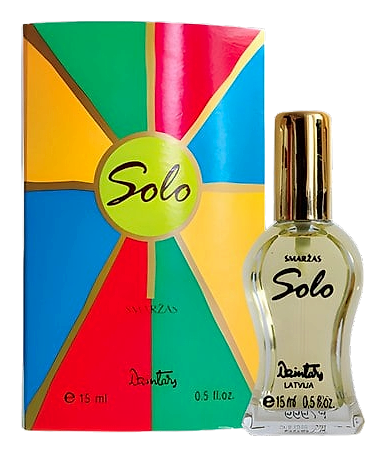
Solo arrived in 1998, a year when Latvia was still finding its footing after independence. Dzintars had spent decades making fragrances for an entire Soviet Union, then suddenly had to relearn what it meant to make perfume for a country that remembered itself. Solo was part of that conversation. The name said something: not a collaboration, not a limited edition, not a tribute to anything external. Just one fragrance. Standing alone. The brief seems to have been simple: warmth without novelty, continuity over trend-chasing.
What makes Solo interesting isn't the yellow florals themselves, plenty of 1990s fragrances leaned on that accord. It's the way the composition refuses to follow the expected arc. The opening is generous, almost plush. The heart deepens into warm spice and cream. But the drydown pulls back. Vetiver and cedar arrive late, cool and dry, cutting through the sweetness before it ever becomes cloying. Most fragrances in this family go louder as they fade. Solo gets quieter. More specific. That choice, that restraint, is what separates it from the pile.
The evolution
The opening announces itself immediately: peach and Damask rose in full bloom, sweet and unapologetic. White freesia adds a slight green edge, keeping the sweetness from feeling like dessert. This phase lasts comfortably for the first hour, maybe ninety minutes, depending on skin. Then the handoff begins. Carnation enters with its peppery warmth, ylang-ylang following behind with something tropical and creamier. Sandalwood softens the transition, preventing the heart from ever feeling too sharp. By hour three, the composition has shifted entirely. The florals recede. What remains is cedar, musk, patchouli, and vetiver, a base that's drier and earthier than the opening suggested. This is the part that surprises. The sweetness doesn't deepen so much as it grounds itself. Vetiver does most of the work here: cool, smoky, slightly mineral. Solo becomes a skin scent faster than you'd expect, but the drydown lasts. The next morning, faint cedar and vetiver linger on fabric. Not loud. Just there. Unhurried.
Cultural impact
Solo arrived in 1998 as part of a quiet moment for Eastern European perfumery, a time when regional houses were rediscovering their own identity after decades of Soviet-era standardization. Dzintars occupied an interesting position: trusted enough for wide distribution, small enough to take risks. Solo's yellow floral-warm spice structure placed it firmly in the 1990s Eastern European tradition, similar in spirit to perfumes from houses like Novosolkov or Kalina. The fragrance never achieved mass Western recognition, but it has maintained a small, loyal following among collectors who appreciate its restraint. The vetiver drydown especially stands out as unusual for the category, most comparable fragrances from this era leaned into warmth without the counterbalance.