The Story
Why it exists.
The beginning
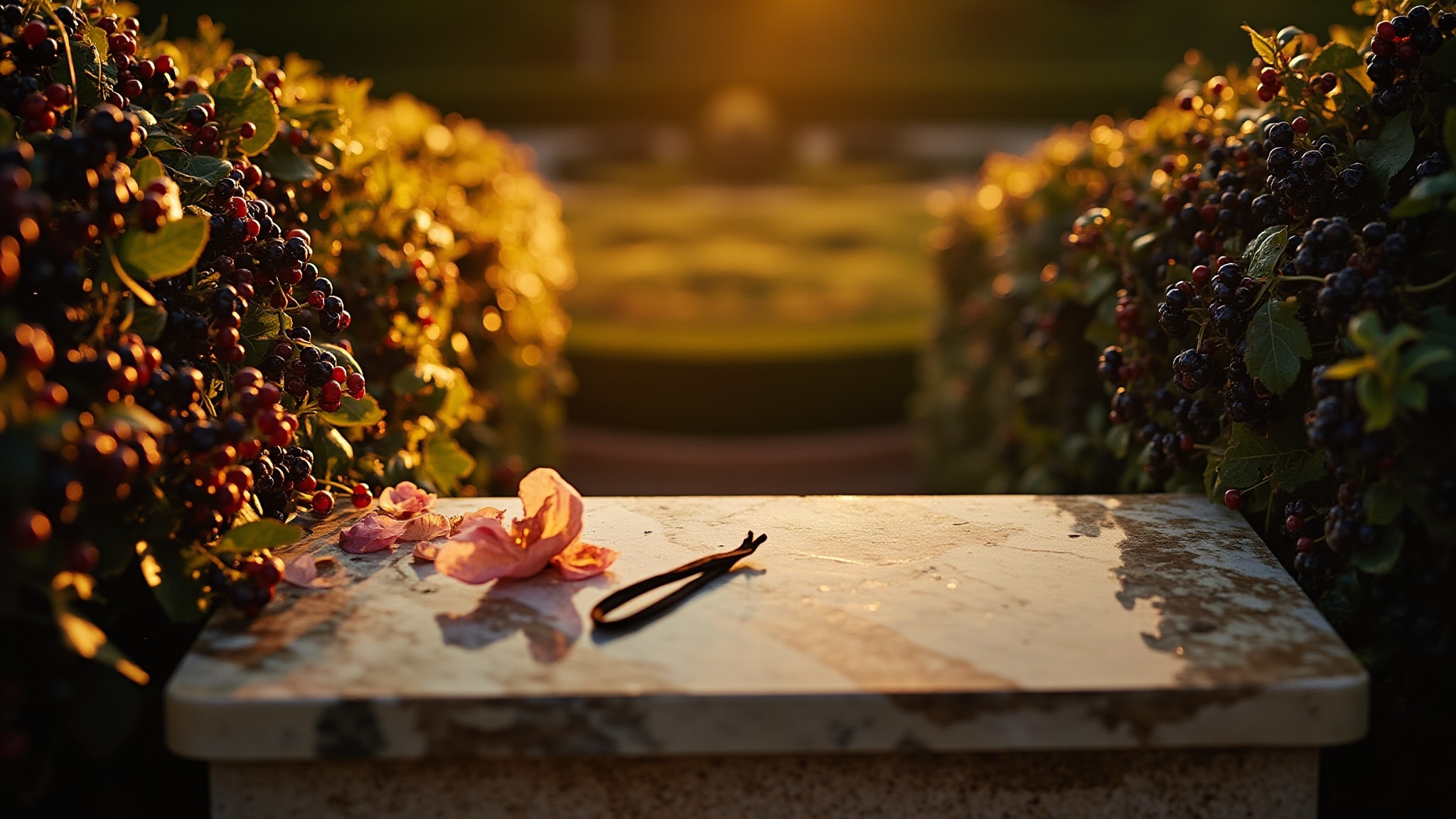
Marina de Bourbon arrived in 1994, born from the Duchess's conviction that Versailles could be worn. She had access to the family's archives and a passion for botanicals that ran deeper than nostalgia. The fragrance was not meant to smell like the palace. It was meant to feel like a walk through its gardens, translated into something you could carry on your skin.
The note structure is what makes it interesting. Blackcurrant at the top provides a sharp, tart counterpoint to ylang-ylang's creamy tropical weight. That tension between bright and soft runs through the entire pyramid. Honey and ginger carry the heart, their warmth grounded by grape and black pepper, before amber and vanilla bring everything home. The result is a fragrance that moves rather than stays fixed, shifting as the hours pass.
The evolution
The opening hits immediately. Blackcurrant gives way to ylang-ylang's creaminess while rose lingers at the edges. Ten minutes in, honey takes over the heart, and with it comes ginger's clean heat. Grape adds a jammy quality that reads almost wine-like at its peak. The base arrives gradually: amber provides warmth, tonka bean adds a hay-like sweetness, and vanilla ties everything together. By the fifth hour, only vanilla and amber remain, skin-close and intimate. On fabric, the drydown extends another hour or two.
Cultural impact
Launched in 1994, Marina de Bourbon has endured as a comfort fragrance for wearers who want warmth without confrontation. The brand's philosophy of treating scent as a personal diary rather than a commercial product is visible here: this is not a fragrance that needs to be noticed to succeed.